Potassium Carbonate → HCID 86712915, compound
Reaction equation

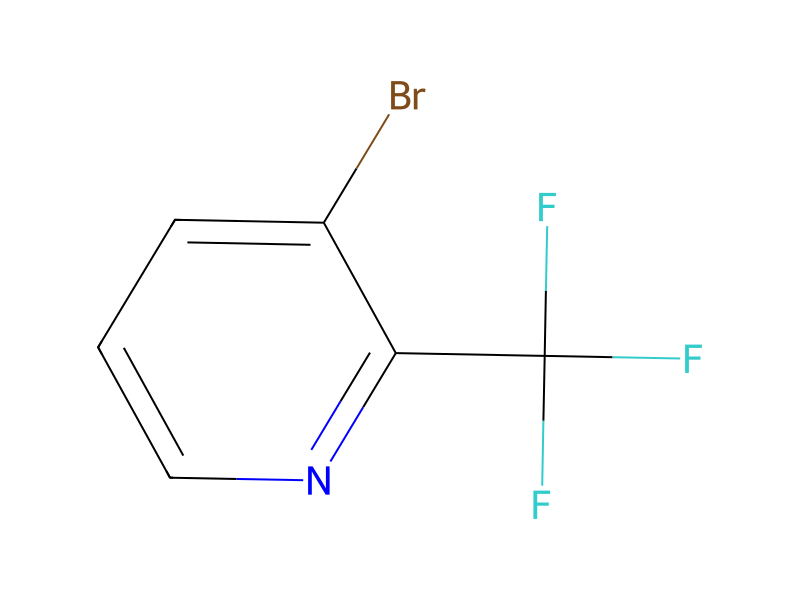
[Si]([O:8][CH2:9][C:10]1([CH3:38])[S:16][CH2:15][CH2:14][N:13]2[C:17]([C:20]3([C:23]4[CH:28]=[CH:27][C:26](B5OC(C)(C)C(C)(C)O5)=[CH:25][CH:24]=4)[CH2:22][CH2:21]3)=[N:18][N:19]=[C:12]2[CH2:11]1)(C(C)(C)C)(C)C.Br[C:40]1[C:41]([C:46]([F:49])([F:48])[F:47])=[N:42][CH:43]=[CH:44][CH:45]=1.C(=O)([O-])[O-].[K+].[K+].C(=O)([O-])O.[Na+]>C(COC)OC.O.C1C=CC([P]([Pd]([P](C2C=CC=CC=2)(C2C=CC=CC=2)C2C=CC=CC=2)([P](C2C=CC=CC=2)(C2C=CC=CC=2)C2C=CC=CC=2)[P](C2C=CC=CC=2)(C2C=CC=CC=2)C2C=CC=CC=2)(C2C=CC=CC=2)C2C=CC=CC=2)=CC=1>[CH3:38][C:10]1([CH2:9][OH:8])[S:16][CH2:15][CH2:14][N:13]2[C:17]([C:20]3([C:23]4[CH:28]=[CH:27][C:26]([C:40]5[C:41]([C:46]([F:49])([F:48])[F:47])=[N:42][CH:43]=[CH:44][CH:45]=5)=[CH:25][CH:24]=4)[CH2:22][CH2:21]3)=[N:18][N:19]=[C:12]2[CH2:11]1Participants
Reactant 4



Product 1

Reagents, catalysts & solvents 3



Procedure
A solution of the compound (555 mg, 1.0 mmol) obtained in Example 16-5), 3-bromo-2-trifluoromethyl pyridine (339 mg, 1.5 mmol), tetrakis(triphenylphosphine)palladium(0) (231 mg, 0.2 mmol), and potassium carbonate (276 mg, 2 mmol) in dimethoxyethane (4 mL) and water (1 mL) was stirred at 130° C. for 1.5 h under microwave irradiation. The reaction mixture was cooled to room temperature, saturated aqueous sodium hydrogencarbonate was added to the reaction mixture, the mixture was extracted with dichloromethane, and the organic layer was washed with saturated sodium chloride solution and dried with anhydrous sodium sulfate. After filtration, the filtrate was concentrated under reduced pressure, and the residue was partially purified by silica gel chromatography (Isco Combiflash, 40 g, methanol:ethyl acetate=0:100 to 40:60, gradient). This partially purified product was dissolved in a solution of 4 M hydrochloric acid (1,4-dioxane solution, 1 mL) in methanol (4 mL), and the mixture was stirred at room temperature for 16 h. The reaction mixture was concentrated under reduced pressure, saturated aqueous sodium hydrogencarbonate was added to the residue, the mixture was extracted with dichloromethane, and the organic layer was washed with saturated sodium chloride solution and dried with anhydrous sodium sulfate. After filtration, the filtrate was concentrated under reduced pressure, and the residue was purified by silica gel chromatography (Isco Combiflash, 12 g, methanol:ethyl acetate=0:100 to 40:60, gradient) to obtain the title compound (135 mg, 32%) as a colorless solid.
Workup
- extractionthe mixture was extracted with dichloromethane
- washthe organic layer was washed with saturated sodium chloride solution
- dry with materialdried with anhydrous sodium sulfate
- filtrationAfter filtration
- concentrationthe filtrate was concentrated under reduced pressure
- customthe residue was partially purified by silica gel chromatography (Isco Combiflash, 40 g, methanol:ethyl acetate=0:100 to 40:60, gradient)
- dissolutionThis partially purified product was dissolved in a solution of 4 M hydrochloric acid (1,4-dioxane solution, 1 mL) in methanol (4 mL)
- concentrationThe reaction mixture was concentrated under reduced pressure, saturated aqueous sodium hydrogencarbonate
- additionwas added to the residue
- extractionthe mixture was extracted with dichloromethane
- washthe organic layer was washed with saturated sodium chloride solution
- dry with materialdried with anhydrous sodium sulfate
- filtrationAfter filtration
- concentrationthe filtrate was concentrated under reduced pressure
- customthe residue was purified by silica gel chromatography (Isco Combiflash, 12 g, methanol:ethyl acetate=0:100 to 40:60, gradient)
Sources & evidence
- ORD record
- ord-a5665ced3e0745a3a8c265f9f20b00ca
- Source dataset
- uspto-grants-2015_01
- Patent number
- US08927536B2
Reaction notes
Loading…