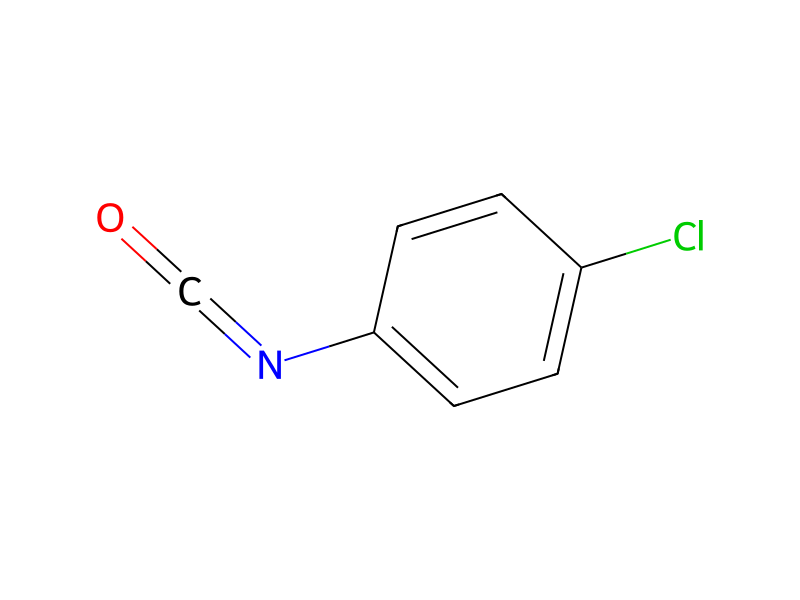
4-Chlorophenyl Isocyanate → (4-Chlorophenylaminocarbonyl)-4,5,6,7-tetrahydro-thieno[3,2-c]pyridine-6-carboxylic acid
Reaction equation

[S:1]1[C:9]2[CH2:8][CH:7]([C:10]([OH:12])=[O:11])[NH:6][CH2:5][C:4]=2[CH:3]=[CH:2]1.[Cl:13][C:14]1[CH:19]=[CH:18][C:17]([N:20]=[C:21]=[O:22])=[CH:16][CH:15]=1>CN(C=O)C>[Cl:13][C:14]1[CH:19]=[CH:18][C:17]([NH:20][C:21]([C:2]2[S:1][C:9]3[CH2:8][CH:7]([C:10]([OH:12])=[O:11])[NH:6][CH2:5][C:4]=3[CH:3]=2)=[O:22])=[CH:16][CH:15]=1Participants
4



Procedure
To a solution of the crude sample 4,5,6,7-tetrahydro-thieno[3,2-c]pyridine-6-carboxylic acid (323 mg, 1.77 mmol) in DMF (10 mL), 4-chlorophenyl isocyanate (336 mg, 2.19 mmol) was added. It was stirred at room temperature overnight. After being concentrated in vacuo, the residue was purified by HPLC to give the desired product as a powder (130 mg). MS 337.3 and 339.3 (M+H, Cl pattern)
Workup
- concentrationAfter being concentrated in vacuo
- customthe residue was purified by HPLC
Sources & evidence
- ORD record
- ord-928ac1d13ae74ac1a86cdd0692047a75
- Source dataset
- uspto-grants-2009_11
- Patent number
- US07612089B2
Reaction notes
Loading…