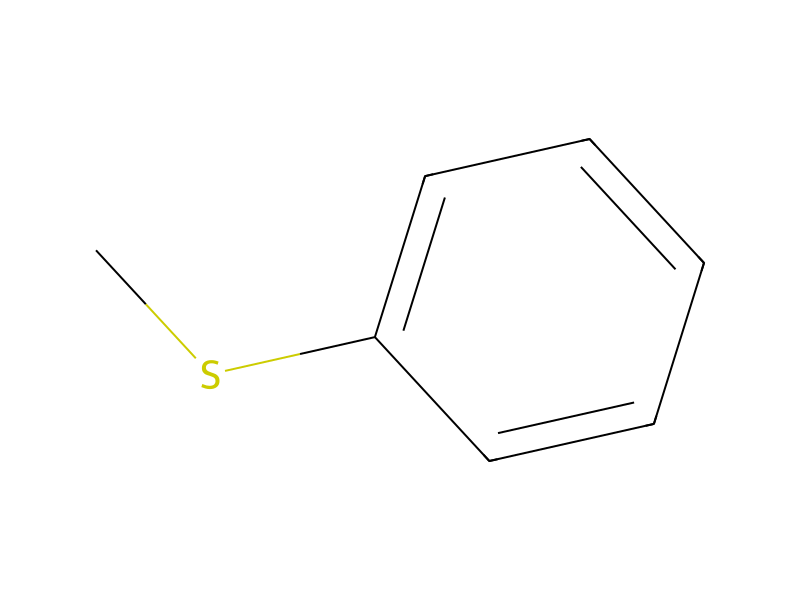
Thioanisole → N-(2-chloro-4-(6-cyano-7-hydroxyquinolin-4-yloxy)phenyl)-N'-methylurea
Reaction equation

C([O:8][C:9]1[CH:18]=[C:17]2[C:12]([C:13]([O:19][C:20]3[CH:25]=[CH:24][C:23]([NH:26][C:27]([NH:29][CH3:30])=[O:28])=[C:22]([Cl:31])[CH:21]=3)=[CH:14][CH:15]=[N:16]2)=[CH:11][C:10]=1[C:32]#[N:33])C1C=CC=CC=1.C1(SC)C=CC=CC=1>FC(F)(F)C(O)=O>[Cl:31][C:22]1[CH:21]=[C:20]([O:19][C:13]2[C:12]3[C:17](=[CH:18][C:9]([OH:8])=[C:10]([C:32]#[N:33])[CH:11]=3)[N:16]=[CH:15][CH:14]=2)[CH:25]=[CH:24][C:23]=1[NH:26][C:27]([NH:29][CH3:30])=[O:28]Participants
4
Reactant 2

Product 1

Reagents, catalysts & solvents 1

Conditions
- Temperature
- 50 °C
Procedure
After adding N-[4-(7-benzyloxy-6-cyanoquinolin-4-yloxy)-2-chlorophenyl]-N′-methylurea (968 mg) and thioanisole (3.7 ml) to trifluoroacetic acid (10 ml), the mixture was stirred overnight at 50° C. It was then concentrated under reduced pressure, ethyl acetate and aqueous sodium bicarbonate were added and the precipitated crystals were filtered out and washed with ethyl acetate to obtain the title compound (849 mg).
Workup
- concentrationIt was then concentrated under reduced pressure, ethyl acetate and aqueous sodium bicarbonate
- additionwere added
- filtrationthe precipitated crystals were filtered out
- washwashed with ethyl acetate
Sources & evidence
- ORD record
- ord-31c4df5489f247d6a6617487fd975c25
- Source dataset
- uspto-grants-2009_11
- Patent number
- US07612092B2
Reaction notes
Loading…