Cyclopropylamine → N-cyclopropyl-1H-pyrrole-3-carboxamide
Reaction equation

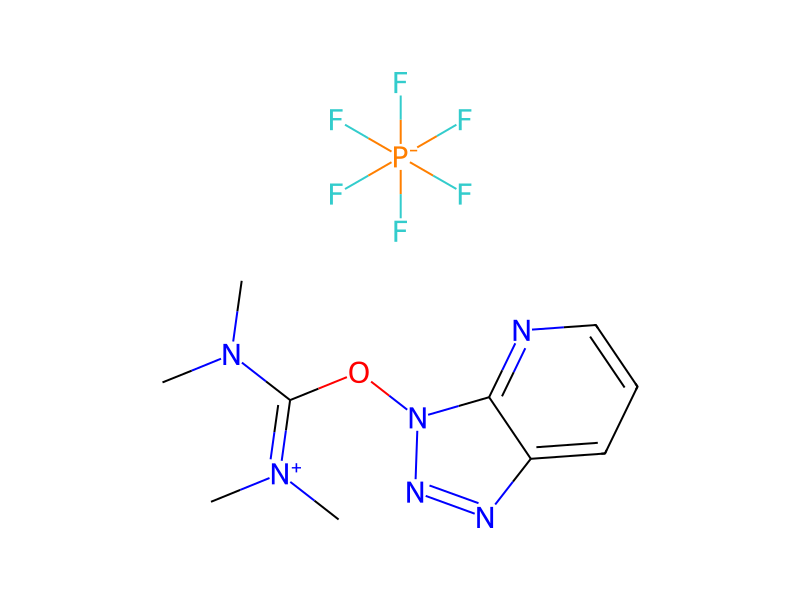
CC[N:3]([CH:7]([CH3:9])[CH3:8])C(C)C.[NH:10]1[CH:14]=[CH:13][C:12]([C:15]([OH:17])=O)=[CH:11]1.C1(N)CC1.CN(C(ON1N=NC2C=CC=NC1=2)=[N+](C)C)C.F[P-](F)(F)(F)(F)F>CN(C=O)C>[CH:7]1([NH:3][C:15]([C:12]2[CH:13]=[CH:14][NH:10][CH:11]=2)=[O:17])[CH2:9][CH2:8]1Participants
6
Reactant 4



Product 1

Reagents, catalysts & solvents 1

Procedure
Following the same procedure in Example 31, step B, using DIPEA (0.87 mL, 0.65 g, 5.0 mmol), 1H-pyrrole-3-carboxylic acid (0.25 g, 2.3 mmol), cyclopropylamine (0.14 g, 2.5 mmol) and HATU (1.0 g, 2.7 mmol) in DMF (10 mL). The crude product was purified by MPLC using EtOAc on silica gel to 52 mg (15%) of the title product. 1H NMR (400 MHz, METHANOL-D4) δ 0.42-0.63 (m, 2 H), 0.66-0.83 (m, 2 H), 2.60-2.80 (m, 1 H), 6.49 (dd, J=2.93, 1.56 Hz, 1 H), 6.69 (dd, J=2.73, 1.95 Hz, 1 H), 7.30 (t, J=1.76 Hz, 1 H).
Workup
- customThe crude product was purified by MPLC
Sources & evidence
- ORD record
- ord-8bdfc22779cb424fa063e5eb81281bad
- Source dataset
- uspto-grants-2009_11
- Patent number
- US07615642B2
Reaction notes
Loading…