4-Octyne → Octane
Reaction equation

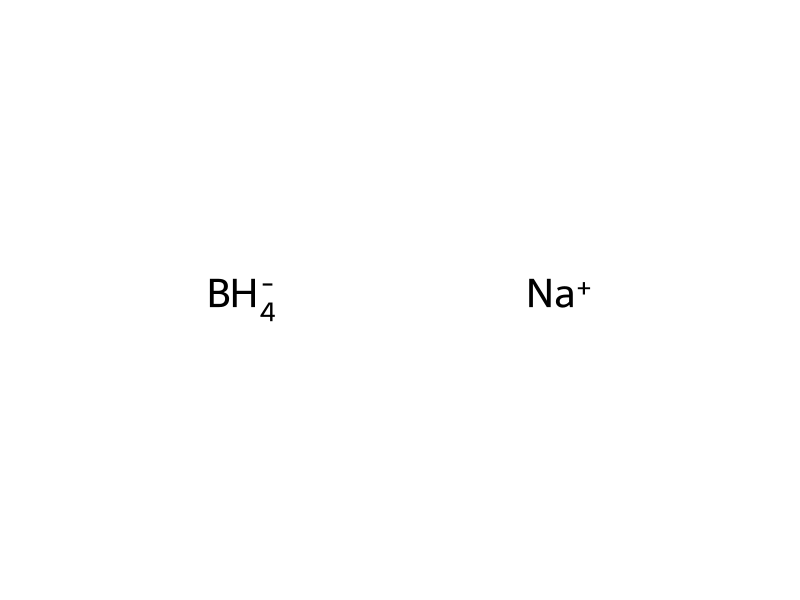
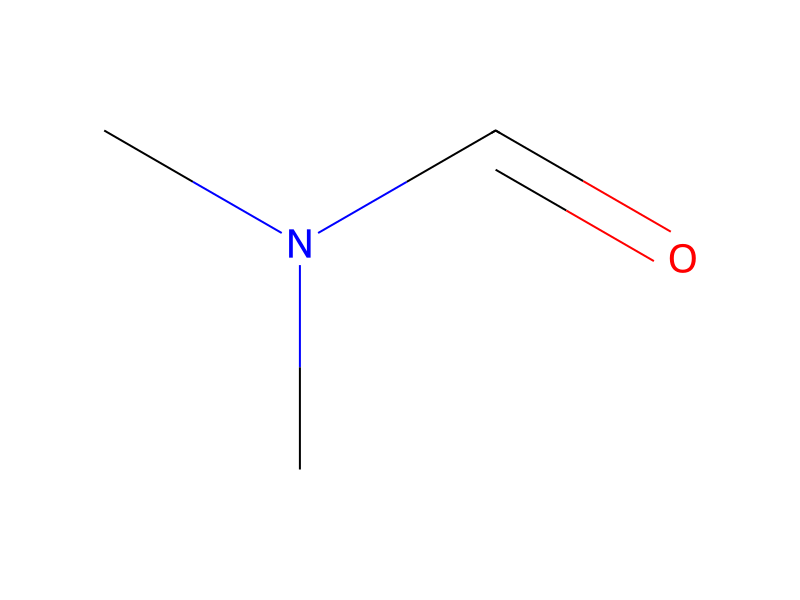
[BH4-].[Na+].[CH3:3][CH2:4][CH2:5][C:6]#[C:7][CH2:8][CH2:9][CH3:10].[H][H].[CH3:13][CH2:14][CH2:15]/[CH:16]=[CH:17]\[CH2:18][CH2:19][CH3:20]>[Pd].CN(C=O)C>[CH3:3][CH2:4][CH2:5]/[CH:6]=[CH:7]/[CH2:8][CH2:9][CH3:10].[CH3:13][CH2:14]/[CH:15]=[CH:16]/[CH2:17][CH2:18][CH2:19][CH3:20].[CH3:3]/[CH:4]=[CH:5]\[CH2:6][CH2:7][CH2:8][CH2:9][CH3:10].[CH3:3][CH2:4][CH2:5][CH2:6][CH2:7][CH2:8][CH2:9][CH3:10]Participants
Reactant 4


Product 4


Reagents, catalysts & solvents 2

Conditions
- Temperature
- 30 °C
Procedure
An example of an alkene compound produced by partially hydrogenating an alkyne compound in the presence of a hydrogenation catalyst containing a hydrogenation promoter and a reducing agent will be described. First, 37.8 mg (1.00 mmol) of NaBH4 was charged to a 100-mL glass autoclave which was equipped with a stirrer and whose periphery was kept at 30° C., and the autoclave was purged with argon gas. Subsequently, 10 mL of DMF, 1.47 mL (10 mmol) of 4-octyne, and 1.00 mL (Pd content=10 μmol) of the hydrogenation promoter (1) prepared in Example 1 were added to the autoclave under an argon atmosphere. A hydrogenation catalyst (1) composed of the hydrogenation promoter (1) and NaBH4 was prepared in the autoclave by this operation. The autoclave was connected to a hydrogen gas cylinder via a gas-introducing tube, and air in the introducing tube was purged with hydrogen at 2 atm three times. Subsequently, hydrogen at 8 atm was introduced into the autoclave, and the hydrogen was then discharged carefully until the pressure was decreased to 2 atm. This operation was repeated seven times. The hydrogen pressure was then increased to 8 atm, and the solution was vigorously stirred at 30° C. Thereby, hydrogenation reaction proceeded. The conversion rate and the selectivity of cis-4-octene in the product were determined by GC. A trans isomer (trans-4-octene), positional isomers (trans-3-octene, cis-2-octene, and the like), and an excessively hydrogenated product (octane) were produced as by-products. Table 4 shows the result of this example. The selectivity described in Table 4 represents the ratio of the amount of cis isomer to the sum of all the amounts of alkenes (a cis isomer, a trans isomer, and positional isomers) and an alkane produced. This definition is also used for Table 5 and thereafter.
Workup
- additioncontaining a hydrogenation promoter
- customwas equipped with a stirrer
- customwas kept at 30° C.
- customthe autoclave was purged with argon gas
- customwas prepared in the autoclave by this operation
- customair in the introducing tube was purged with hydrogen at 2 atm three times
- additionSubsequently, hydrogen at 8 atm was introduced into the autoclave
- temperatureThe hydrogen pressure was then increased to 8 atm
- customThereby, hydrogenation reaction
Sources & evidence
- ORD record
- ord-72cf1728f9ac42a490f8d7c9344d47b4
- Source dataset
- uspto-grants-2009_11
- Patent number
- US07619125B2
Reaction notes
Loading…