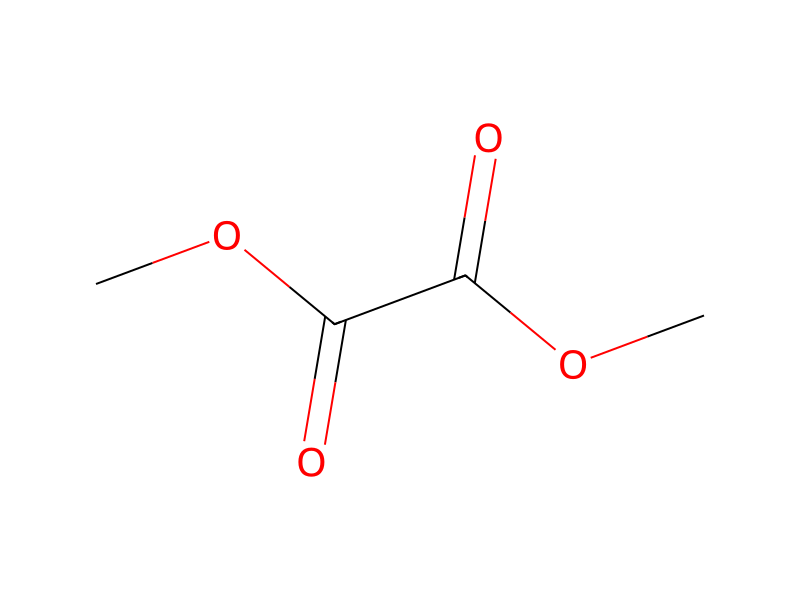
Dimethyl oxalate → Methyl 4-(3-pyridazinyl)-2,4-dioxobutanoate
Reaction equation

C[Si]([N-][Si](C)(C)C)(C)C.[Li+].[C:11]([C:14]1[N:15]=[N:16][CH:17]=[CH:18][CH:19]=1)(=[O:13])[CH3:12].[C:20](OC)(=[O:25])[C:21]([O:23][CH3:24])=[O:22]>O1CCCC1>[CH3:24][O:23][C:21](=[O:22])[C:20](=[O:25])[CH2:12][C:11]([C:14]1[N:15]=[N:16][CH:17]=[CH:18][CH:19]=1)=[O:13]Participants
Reactant 3


Product 1

Reagents, catalysts & solvents 1

Conditions
- Temperature
- -78 °C
Procedure
In an argon atmosphere and while cooling at −78° C., 1.0M lithium bis(trimethylsilyl)amide in tetrahydrofuran (19 mL) was added dropwise to 3-acetylpyridazine (2.097 g) in tetrahydrofuran (50 mL), followed by stirring for 1 hour. To the reaction mixture, dimethyl oxalate (4.055 g) in tetrahydrofuran (35 mL) was added dropwise, and the resultant mixture was stirred at 0° C. for 2 hours. The reaction solvent was removed under reduced pressure. Water was added to the residue, and the mixture was washed with diethyl ether. The aqueous layer was slightly acidified with aqueous 1N hydrochloric acid, and extracted with ethyl acetate. The organic layer was dried over sodium sulfate anhydrate, followed by filtration. The solvent was removed under reduced pressure, to thereby give 4-(3-pyridazinyl)-2,4-dioxobutanoic acid methyl ester as a solid (2.63 g, 73%).
Workup
- customThe reaction solvent was removed under reduced pressure
- additionWater was added to the residue
- washthe mixture was washed with diethyl ether
- extractionextracted with ethyl acetate
- dry with materialThe organic layer was dried over sodium sulfate anhydrate
- filtrationfollowed by filtration
- customThe solvent was removed under reduced pressure
Sources & evidence
- ORD record
- ord-52ac3b00bd124d8591cbb77b5f1e72c0
- Source dataset
- uspto-grants-2009_11
- Patent number
- US07622471B2
Reaction notes
Loading…