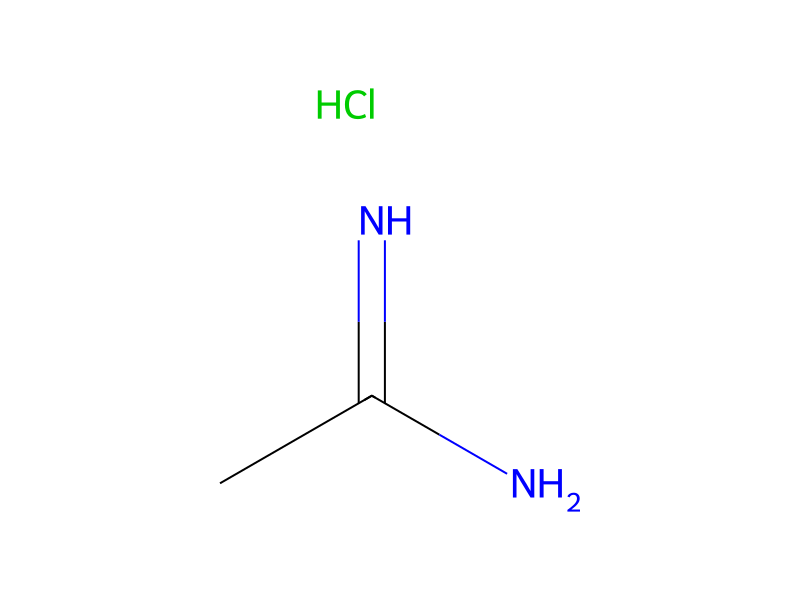
Acetamidine monohydrochloride → Ethyl 4-(2-chlorophenyl)-2-methylpyrimidine-5-carboxylate
Reaction equation

Cl.C(N)(=N)C.[O-]CC.[Na+].ClC1C=CC=CC=1C(C(=CN(C)C)C(OCC)=O)=O.[Cl:29][C:30]1[CH:35]=[CH:34][CH:33]=[CH:32][C:31]=1[C:36]1[C:41]([C:42]([O:44][CH2:45][CH3:46])=[O:43])=[CH:40][N:39]=[C:38]([C:47]2C=CC=CC=2)[N:37]=1>C(O)C>[Cl:29][C:30]1[CH:35]=[CH:34][CH:33]=[CH:32][C:31]=1[C:36]1[C:41]([C:42]([O:44][CH2:45][CH3:46])=[O:43])=[CH:40][N:39]=[C:38]([CH3:47])[N:37]=1Participants
6
Reactant 4



Product 1

Reagents, catalysts & solvents 1

Procedure
To a stirred solution of 2.09 g of acetoamidine hydrochloride in 50 cc of ethanol was added 1.50 g of sodium ethoxide at room temperature and the mixture was stirred for 10 minutes. The resulting suspension was added to 6.1 g of compound D in 50 cc of ethanol and the resulting mixture was heated under reflux for 6 hours. Thereafter, 4.5 g of compound F was obtained in the same manner as for compound E. Yield: 73.7%.
Workup
- temperaturethe resulting mixture was heated
- temperatureunder reflux for 6 hours
Sources & evidence
- ORD record
- ord-f987d3c04a524e188ceb97eebee17dc9
- Source dataset
- uspto-grants-1996_03
- Patent number
- US05500424
Reaction notes
Loading…