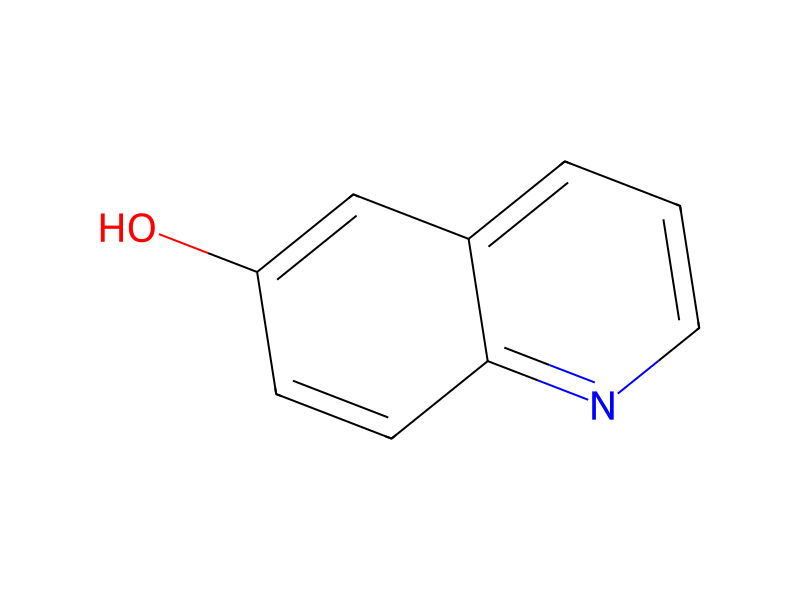
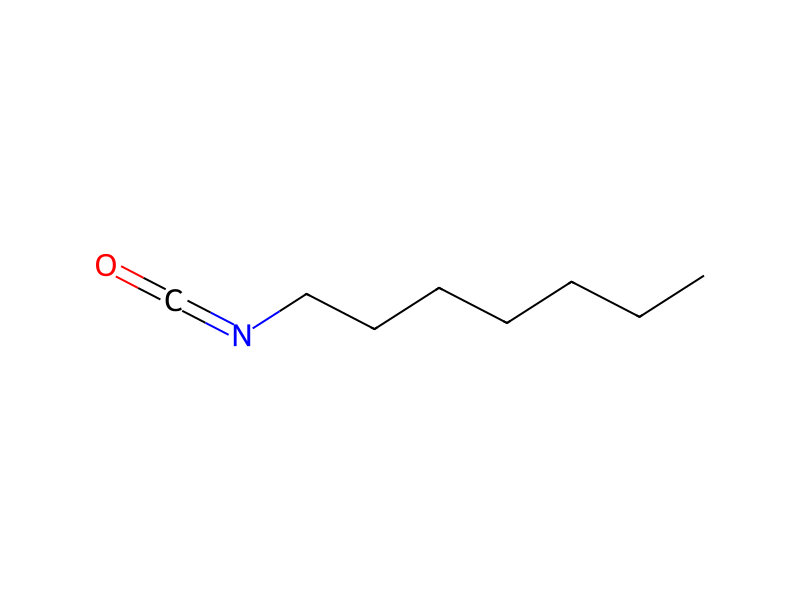
Pyridine → Heptyl-Carbamic Acid quinolin-6-yl ester
Reaction equation

[N:1]1[C:10]2[C:5](=[CH:6][C:7]([OH:11])=[CH:8][CH:9]=2)[CH:4]=[CH:3][CH:2]=1.[CH2:12]([N:19]=[C:20]=[O:21])[CH2:13][CH2:14][CH2:15][CH2:16][CH2:17][CH3:18].N1C=CC=CC=1>O1CCCC1>[N:1]1[C:10]2[C:5](=[CH:6][C:7]([O:11][C:20](=[O:21])[NH:19][CH2:12][CH2:13][CH2:14][CH2:15][CH2:16][CH2:17][CH3:18])=[CH:8][CH:9]=2)[CH:4]=[CH:3][CH:2]=1Participants
5
Reactant 3

Product 1

Reagents, catalysts & solvents 1

Conditions
- Temperature
- 21 °C
Procedure
A mixture of quinolin-6-ol (0.29 g., 2 mmol), heptyl isocyanate (0.39 ml, 2.4 mmol) and pyridine (2 ml) in dry tetrahydrofuran (10 ml) was stirred at room temperature (21° C.) for 40 hours, the reaction mixture was concentrated under vaccum and the residue was washed with water (2×5 ml) and crystallized with ether to give 1b; yield: 0.30 g. (52.4%).
Workup
- concentrationthe reaction mixture was concentrated under vaccum
- washthe residue was washed with water (2×5 ml)
- customcrystallized with ether
Sources & evidence
- ORD record
- ord-7900fc9d3cf1468ba8787886236fa8bb
- Source dataset
- uspto-grants-2010_02
- Patent number
- US07655801B2
Reaction notes
Loading…