Hydrochloric Acid → Nitroindoline
Reaction equation

[NH:1]1[C:9]2[C:4](=[CH:5][CH:6]=[CH:7][CH:8]=2)[CH2:3][CH2:2]1.[N:10]([O-:12])=[O:11].[Na+].Cl>O.CCOCC>[N+:10]([N:1]1[C:9]2[C:4](=[CH:5][CH:6]=[CH:7][CH:8]=2)[CH2:3][CH2:2]1)([O-:12])=[O:11]Participants
6
Reactant 3

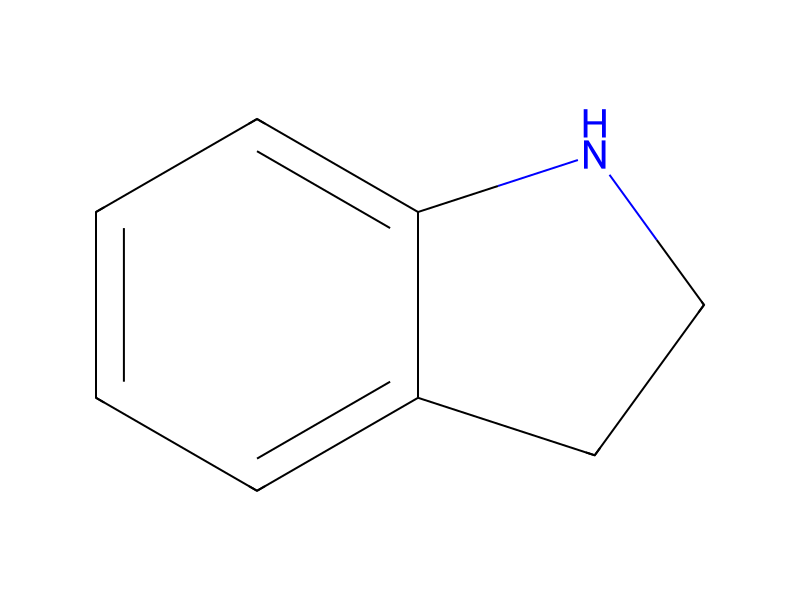

Product 1

Reagents, catalysts & solvents 2


Procedure
Following the procedure of Example 1, step 1, indoline (20 g, 170 mmol), sodium nitrite (14 g, 200 mmol), concentrated hydrochloric acid (30 mL) in water (70 mL) and ether (120 mL) provided 1-nitroindoline (31 g), which was reduced with zinc dust (˜50 g) in acetic acid (500 mL) to provide 1-aminoindoline (29 g). A mixture of 1-aminoindoline (17 g, 130 mmol), cycloheptanone (15 mL, 130 mmol), and concentrated sulfuric acid (20 mL) in water (180 mL) provided 8.2 g of 4,5,8,9,10,11-hexahydro-7H-cyclohepta[b]pyrrolo[3,2,1-hi]indole. MS (ESI) m/z 212.
Sources & evidence
- ORD record
- ord-a7bcd3676cf742f2b3023141617642a7
- Source dataset
- uspto-grants-2010_02
- Patent number
- US07662831B2
Reaction notes
Loading…