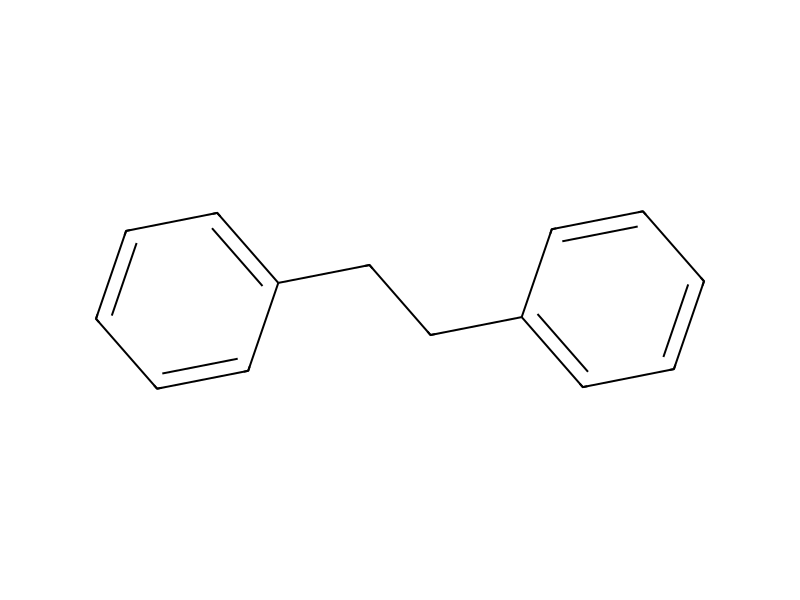
Diphenylacetylene → Dibenzyl
Reaction equation

[H][H].[C:3]1([C:9]#[C:10][C:11]2[CH:16]=[CH:15][CH:14]=[CH:13][CH:12]=2)[CH:8]=[CH:7][CH:6]=[CH:5][CH:4]=1>C1COCC1>[C:3]1([CH2:9][CH2:10][C:11]2[CH:12]=[CH:13][CH:14]=[CH:15][CH:16]=2)[CH:8]=[CH:7][CH:6]=[CH:5][CH:4]=1Participants
4
Reactant 2


Product 1
Reagents, catalysts & solvents 1

Procedure
In Example 5, hydrogenation reaction was conducted under the same condition as Example 1 for THF diluted solution concentration of the substance to be reduced, its flow rate, and hydrogen 9 flow rate, using 1,2-diphenylacetylene as the substance to be reduced. The reaction time was within five minutes. The analytical result of the reaction product by 1H-NMR showed almost complete hydrogenation of 1,2-diphenylacetylene, and 1,2-diphenylethane was obtained at about 100% yield (See FIG. 6.).
Workup
- customIn Example 5, hydrogenation reaction
- customThe analytical result of the reaction product
Sources & evidence
- ORD record
- ord-0450aa5b9c794ff78c106cf3010b2794
- Source dataset
- uspto-grants-2010_02
- Patent number
- US07663008B2
Reaction notes
Loading…