Pyridine → Benzeneacetyl chloride, 4-bromo-
Reaction equation

[Br:1][C:2]1[CH:7]=[CH:6][C:5]([CH2:8][C:9]([OH:11])=O)=[CH:4][CH:3]=1.N1C=CC=CC=1.C(Cl)(=O)C([Cl:21])=O.CN(C=O)C>CCOCC>[Br:1][C:2]1[CH:7]=[CH:6][C:5]([CH2:8][C:9]([Cl:21])=[O:11])=[CH:4][CH:3]=1Participants
6
Reactant 4



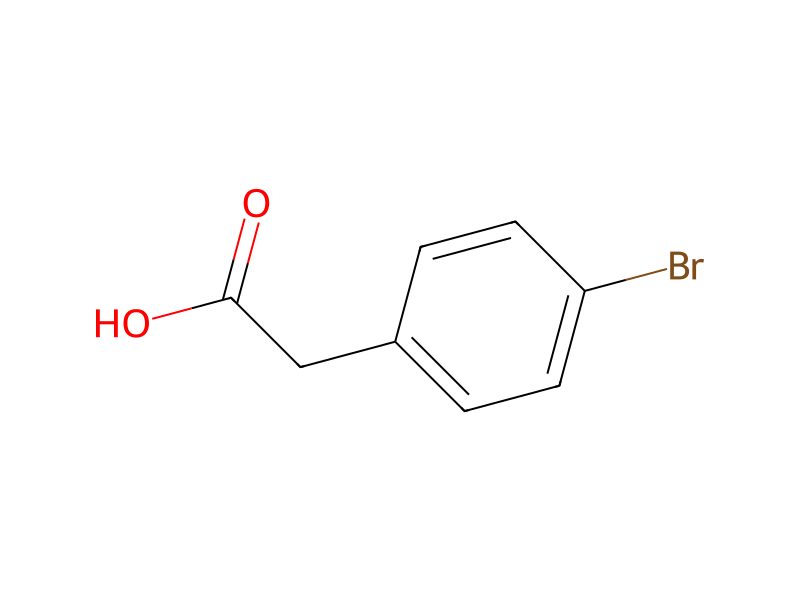
Product 1

Reagents, catalysts & solvents 1

Procedure
Dissolve 4-bromophenylacetic acid (25.39; 118.07 mmol) in ether (200 mL). Add anhydrous pyridine (1 mL) and cool the reaction to 0° C., then add oxalyl chloride (18.44 g, 12.86 mL, 145.32 mmol). After 15 minutes, allow the reaction to come to ambient temperature. At 1.5 hours, add DMF (0.4 mL) and stir for an additional hour. Concentrate to a thick amber oil. Dilute with dichloromethane (118 mL) to provide a 1 N stock solution of (4-bromo-phenyl)-acetyl chloride (118 mmol).
Workup
- customthe reaction to 0° C.
- customthe reaction
- customto come to ambient temperature
- waitAt 1.5 hours
- concentrationConcentrate to a thick amber oil
- additionDilute with dichloromethane (118 mL)
Sources & evidence
- ORD record
- ord-ab927b2774c043ccaa727185768f948f
- Source dataset
- uspto-grants-2010_02
- Patent number
- US07666879B2
Reaction notes
Loading…