Hydrochloric Acid → HCID 20382079, compound
Reaction equation

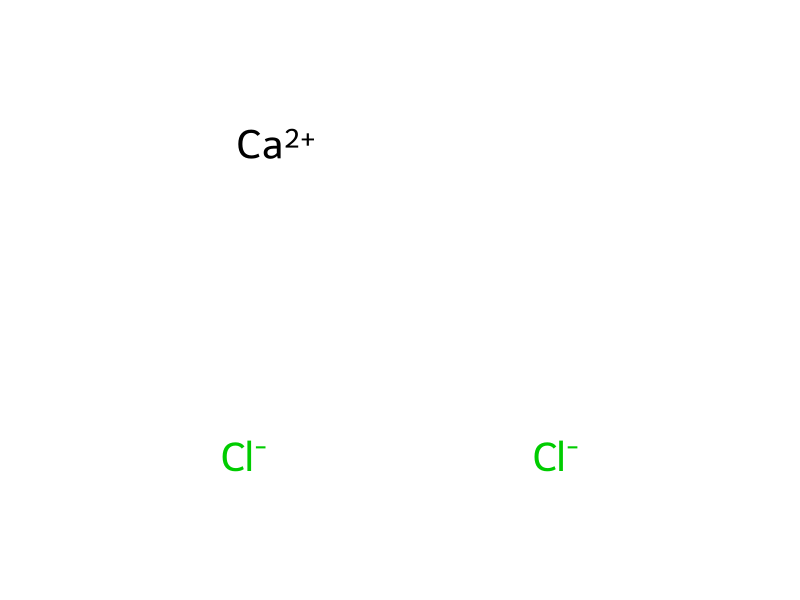
[Cl-:1].[Cl-].[Ca+2].[CH2:4]([N:6]1[C:14]2[N:13]=[C:12]3[CH:15](O)[C:16]4[CH:23]=[CH:22][CH:21]=[CH:20][C:17]=4[CH2:18][CH2:19][C:11]3=[CH:10][C:9]=2[CH:8]=[N:7]1)[CH3:5].Cl>C1C=CC=CC=1>[Cl:1][CH:15]1[C:12]2=[N:13][C:14]3[N:6]([CH2:4][CH3:5])[N:7]=[CH:8][C:9]=3[CH:10]=[C:11]2[CH2:19][CH2:18][C:17]2[CH:20]=[CH:21][CH:22]=[CH:23][C:16]1=2Participants
5
Reactant 3


Product 1

Reagents, catalysts & solvents 1

Procedure
6 g. of pulverized CaCl2 are added with stirring to a solution of 11 g. of 1-ethyl-1,5,6,11-tetrahydrobenzo[5,6]cyclohepta[1,2-b]pyrazolo[4,3-e]pyridin-11-ol (0.04 mol.), from example 2, in 175 ml. of dry benzene. The suspension is saturated for 15 hours with anhydrous hydrogen chloride at room temperature. After standing overnight, the mixture is filtered and the benzene is evaporated in vacuo. The residue is extracted with ether, treated with charcoal, and refrigerated to crystallize 8.3 g. of 11-chloro-1-ethyl-1,5,6,11-tetrahydrobenzo[5,6]cyclohepta[1,2-b]pyrazolo[4,3-e]pyridine; m.p. 107°-110° (ether).
Workup
- filtrationthe mixture is filtered
- customthe benzene is evaporated in vacuo
- extractionThe residue is extracted with ether
- additiontreated with charcoal
- customto crystallize 8.3 g
Sources & evidence
- ORD record
- ord-64461c5cec78452ea610ac644f59a58e
- Source dataset
- uspto-grants-1979_12
- Patent number
- US04179564
Reaction notes
Loading…