Sodium Bicarbonate → 2-n-Heptylthio-4-hydroxycyclopent-2-en-1-one
Reaction equation

[CH2:1]([S:8][C:9]1[C:10](=[O:21])[CH2:11][CH:12]([O:14]C2CCCCO2)[CH:13]=1)[CH2:2][CH2:3][CH2:4][CH2:5][CH2:6][CH3:7].C(=O)(O)[O-].[Na+].C1CCCCC1.C(OCC)(=O)C>C(O)(=O)C.O.O1CCCC1>[CH2:1]([S:8][C:9]1[C:10](=[O:21])[CH2:11][CH:12]([OH:14])[CH:13]=1)[CH2:2][CH2:3][CH2:4][CH2:5][CH2:6][CH3:7]Participants
7
Reactant 3


Product 1

Reagents, catalysts & solvents 3



Procedure
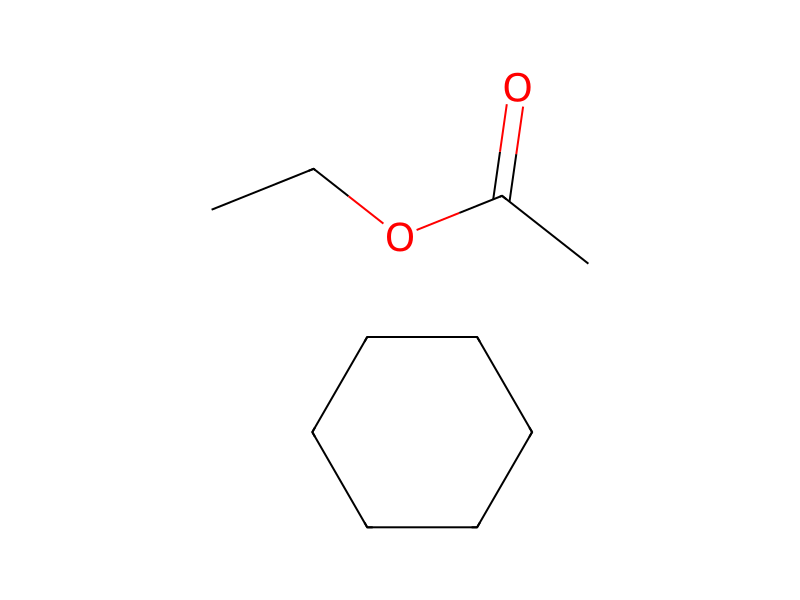
2-n-Heptylthio-4-tetrahydropyranyloxycyclopent-2-en-1-one (80 mg) was dissolved in 5 ml of a mixture of acetic acid, water and tetrahydrofuran in a ratio of 3:1:1 and 2 ml of acetic acid, and the solution was allowed to stand at room temperature for 12 hours. The reaction mixture was neutralized with sodium bicarbonate, and extracted with ethyl acetate. The extract was treated by a customary procedure to afford 58 mg (95% yield) of 2-n-heptylthio-4-hydroxycyclopent-2-en-1-one having a single spot in thin-layer chromatography (cyclohexane/ethyl acetate=4/6). The product had the following characteristics.
Workup
- extractionextracted with ethyl acetate
- additionThe extract was treated by a customary procedure
Sources & evidence
- ORD record
- ord-5f0dfdb5ae0b429abecec7d8bcda2a1e
- Source dataset
- uspto-grants-1979_12
- Patent number
- US04180672
Reaction notes
Loading…