Water → 4-Nitrodiphenylamine
Reaction equation

C([NH:3][C:4]1[CH:9]=[CH:8][CH:7]=[CH:6][CH:5]=1)=O.[K].O.[N+:12]([C:15]1[CH:20]=[CH:19][C:18](Cl)=[CH:17][CH:16]=1)([O-:14])=[O:13].C(NC1C=CC=CC=1)=O>C1(C)C(C)=CC=CC=1>[CH:7]1[CH:8]=[CH:9][C:4]([NH:3][C:18]2[CH:19]=[CH:20][C:15]([N+:12]([O-:14])=[O:13])=[CH:16][CH:17]=2)=[CH:5][CH:6]=1Participants
Reactant 4


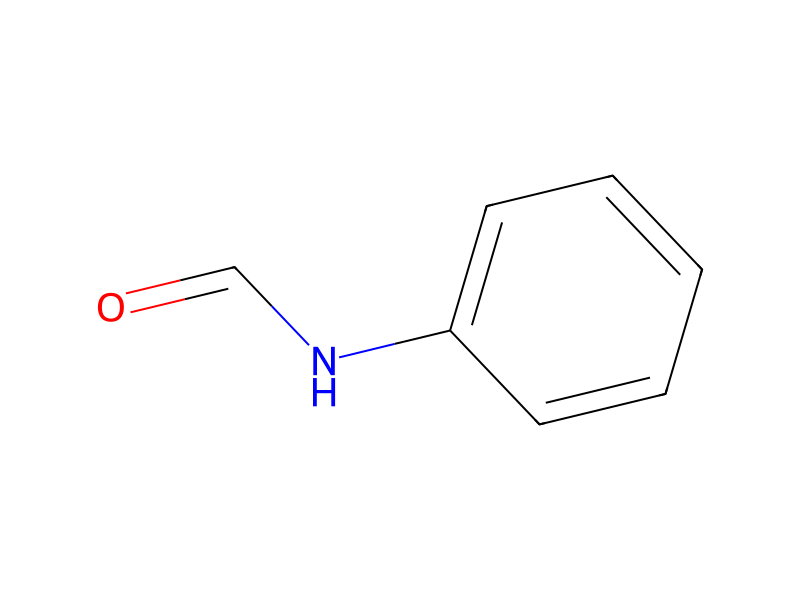

Product 1

Reagents, catalysts & solvents 1

Procedure
The highest yields at minimum reaction temperature are attained from essentially anhydrous potassium formanilide, but small amounts of water have little effect. From a reaction mixture of 31.8 parts by weight (0.2 mole) of dry potassium formanilide, 24.2 parts by weight (0.154 mole) of para-nitrochlorobenzene, 9.3 parts by weight (0.077 mole) of formanilide and 25 parts by weight of xylene there is obtained after heating at 137°-149° C. for about 125 minutes a 92% yield of 4-nitrodiphenylamine and 97% conversion. The addition of 0.5% weight and 1.0% by weight of water respectively based on the potassium formanilide results in little or no reduction in yield and conversion. Addition of 1.0% by weight 45% potassium hydroxide improves the yield slightly. The innocuous effect of a little free water is to be contrasted with the adverse effect of bound water. Potassium formanilide forms a monohydrate which hydrolyzes rapidly when heated above temperatures of 85°-90° C. Replacing about half the formanilide with aniline in the foregoing procedure gives comparable result. The presence of aniline reduces the by-product carbon monoxide about 40% with formation of formanilide by mechanism imperfectly understood.
Workup
- customThe highest yields at minimum reaction temperature
- customthere is obtained
Sources & evidence
- ORD record
- ord-9025c1bbf0684c3198890b4f46cf03b1
- Source dataset
- uspto-grants-1980_02
- Patent number
- US04187248
Reaction notes
Loading…