HomeMCPWorkbenchSkills
HomeWorkbenchNotificationsMe
llms.txt · MCP GuidePrivacy Policy · Terms of Service · Supportv1.8.1
  1. Home
  2. /Compound

4-Nitrodiphenylamine

HCID 13271
New reaction
Print

Completing data — refresh the page later to see the latest

Basic informationNames & identifiersPropertiesSafety & regulationChemistry & industryRelated reactionsCompound notes
Substructure searchFind similar structures

Basic information

CAS
836-30-6
Standard SMILES
O=[N+]([O-])c1ccc(Nc2ccccc2)cc1
InChIKey
XXYMSQQCBUKFHE-UHFFFAOYSA-N
Molecular formula
C12H10N2O2
Average molar mass
214.22 g/mol
Monoisotopic mass
214.07422756

Names & identifiers

Preferred name
4-Nitrodiphenylamine
IUPAC
4-nitro-N-phenylaniline
English name
4-Nitrodiphenylamine
Molecular formula
C12H10N2O2
Molecular weight
214.22

Names & synonyms

4-NITRODIPHENYLAMINE836-30-64-Nitro-N-phenylanilinep-Nitrodiphenylamine(4-nitrophenyl)phenylamineBenzenamine, 4-nitro-N-phenyl-Diphenylamine, 4-nitro-p-Nitrophenylphenylamine4-Nitrodifenylamin4-NdpaN-(4-Nitrophenyl)benzenamineAmine, diphenyl, 4-nitro-
Show more names
NSC 33836TIMTEC-BB SBB0080554-nitro-diphenylaminGlycerol Impurity 77diphenyl,4-nitro-aminLABOTEST-BB LT01487848
4-Nitro-diphenylamineMFCD000073014-nitro-N-phenyl-anilineEINECS 212-646-2BRN 2051910MLS000584664DTXSID8027323AI3-02915

Database identifiers

CAS
836-30-6
PubChem CID
13271
DTXSID
DTXSID8027323
ChEMBL
CHEMBL1323785
UNII
5ZOC179N5D
EC Number
212-646-2
Nikkaji
J38.267A

Properties

Computed structural propertiesFilling in

XLogP
3.7
Topological polar surface area
57.9 Ų
Hydrogen bond donors
1
Hydrogen bond acceptors
3
Rotatable bonds
2
Heavy atoms
16
Formal charge
0
Complexity
226

Experimental & physicochemical properties

Chemical ClassesNitrogen Compounds -> Other Aromatics (Nitrogen)
SpringerMaterials PropertiesBoiling point
LogP · 2 items

3.82

3.74

Color/FormYELLOW NEEDLES OR TABLETS FROM CARBON TETRACHLORIDE
Solubility · 3 items

INSOL IN WATER; VERY SOL IN ALCOHOL, ACETIC ACID

SOL IN CONCN SULFURIC ACID

Solubility in water: none

Flash Point · 2 items

190 °C

190 °C o.c.

Boiling Point · 2 items

211 °C AT 30 MM HG

343 °C

Melting Point · 2 items

133.5 °C

132-135 °C

Vapor Pressure · 2 items

0.0000166 [mmHg]

Vapor pressure at 25 °C: negligible

Safety & regulation

Safety information is for reference only and does not replace the supplier’s Safety Data Sheet (SDS), applicable regulations, or professional assessment.

GHS classification

GHS Classification · 6 items

This chemical does not meet GHS hazard criteria for 3.6% (3 of 83) of reports.

Warning

H315 (91.6%): Causes skin irritation [Warning Skin corrosion/irritation]

P261, P264, P264+P265, P271, P273, P280, P302+P352, P304+P340, P305+P351+P338, P319, P321, P332+P317, P337+P317, P362+P364, P391, P403+P233, P405, and P501 (click each P-code to see the statement)

Aggregated GHS information provided per 83 reports by companies from 5 notifications to the ECHA C&L Inventory. Each notification may be associated with multiple companies.

Danger

Hazard information

Regulatory InformationChemical: Benzenamine, 4-nitro-N-phenyl-
Fire HazardsCombustible. Gives off irritating or toxic fumes (or gases) in a fire.
Hazards SummaryCan induce methemoglobinemia; [ICSC] Emergency treatment: Methemoglobinemia; [HSDB] An irritant; [Alfa Aesar MSDS]
UN ClassificationUN Hazard Class: 4.1; UN Pack Group: III
Chemical DangersDecomposes on heating and on burning. This produces toxic fumes of nitrogen oxides. Reacts with strong oxidants.
Hazard Classes and Categories · 2 items

Skin Irrit. 2 (91.6%)

Specific target organ toxicity - Repeated exposure - Category 1 (blood system), Category 2 (kidney)

Safety & protection

Chemistry & industry

Uses & manufacturing

UsesUsed as a chemical intermediate; [OECD SIDS: Benzenamine, 4-nitro-N-phenyl - 1998]
General Manufacturing InformationBenzenamine, 4-nitro-N-phenyl-: ACTIVE

Applications

Uses4-Nitrodiphenylamine was used to study reduction of nitrated diphenylamine derivatives in sediment water batch enrichments and dense cell suspensions of anaerobic, aromatic-compound-mineralizing pure bacterial cultures.

General Description4-Nitrodiphenylamine undergoes heterogeneous catalytic transfer hydrogenation to form p-phenylenediamines. 4-Nitrodiphenylamine is used as stabilizer for propellants and explosives.

Upstream & downstream products

Upstream raw materials

2-Nitrodiphenylamine2-(Methylamino)pyridineNitrobenzene

Downstream products

AmoscanateDisperse Orange 974-AminodiphenylamineDisperse Orange 97N-Isopropyl-N'-phenyl-1,4-phenylenediamine

Related reactions

46 records
New reaction record
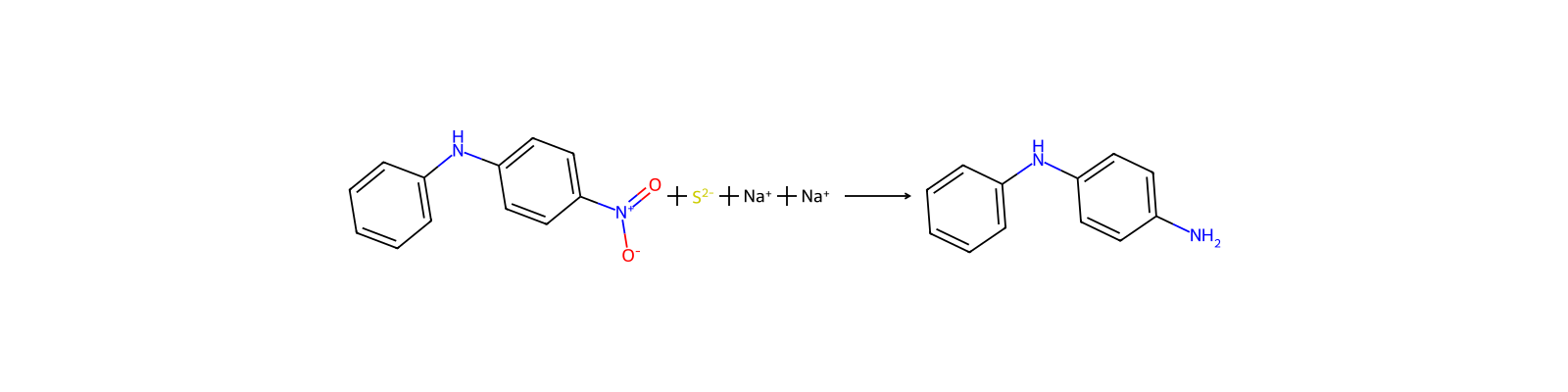
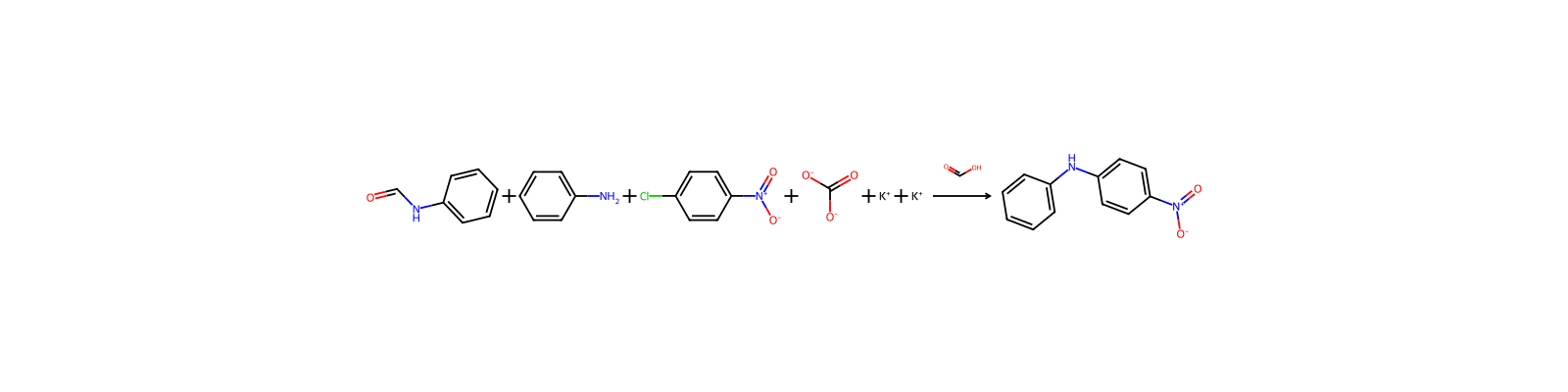
HRID 7261 reaction equation
HRID 7261As productuspto-grants-2006_08
HRID 7262 reaction equation
HRID 7262As reactantuspto-grants-2006_08
HRID 7263 reaction equation
HRID 7263As productuspto-grants-2006_08
HRID 7264 reaction equation
HRID 7264As reactantuspto-grants-2006_08
HRID 65489 reaction equation
HRID 65489As productuspto-grants-1986_09
HRID 127815 reaction equation
HRID 127815As productuspto-grants-1981_03
HRID 379001 reaction equation
HRID 379001As reactantuspto-grants-2001_10
HRID 412793 reaction equation
HRID 412793As productuspto-grants-2003_05
PreviousPage 1 of 6

Compound notes

On this pageBasic informationNames & identifiersPropertiesSafety & regulationChemistry & industryRelated reactionsCompound notes
Physical Description · 2 items

Yellow solid; [ICSC] Darkens upon exposure to light; [CHEMINFO] Yellow crystalline powder; [Alfa Aesar MSDS]

YELLOW NEEDLES.

Other Experimental PropertiesVIOLET COLOR IN SULFURIC ACID

Physicochemical properties

Melting point
132 · 132-135 °C (lit.)
Boiling point
211 °C · 211 °C (30 mmHg)
Density
1.2042 · 1.2042 (rough estimate)
refractive index
1.666 · 1.6660 (estimate)
Flash point
190 °C · 190°C
storage temp.
Refrigerator
solubility
DMSO (Slightly), Methanol (Slightly)
form
Solid
pka
-2.6 · -2.60±0.20(Predicted)
color
Orange to Brown
Water Solubility
INSOLUBLE
BRN
2051910 · 2051910
Henry's Law Constant
2.4 · 2.4×103 mol/(m3Pa) at 25℃, Zhang et al. (2010)
InChI
1S/C12H10N2O2/c15-14(16)12-8-6-11(7-9-12)13-10-4-2-1-3-5-10/h1-9,13H
InChIKey
XXYMSQQCBUKFHE-UHFFFAOYSA-N
SMILES
[O-][N+](=O)c1ccc(Nc2ccccc2)cc1
CAS DataBase Reference
836 · 836-30-6(CAS DataBase Reference)
EWG's Food Scores
1 · 1
FDA UNII
5 ZOC179N5D · 5ZOC179N5D
NIST Chemistry Reference
N-(4-Nitrophenyl)-N-phenylamine(836-30-6)
EPA Substance Registry System
4 · 4-Nitrodiphenylamine (836-30-6)
UNSPSC Code
12352100 · 12352100
NACRES
22 · NA.22
Symbol(GHS)
7 · GHS07
Signal word
Warning
Hazard statements
315 · H315-H319-H335
Precautionary statements
261 · P261-P264-P271-P280-P302+P352-P305+P351+P338
target organs
Respiratory system
PPE
95 · dust mask type N95 (US), Eyeshields, Gloves
Hazard Codes
Xi
Risk Statements
36 · 36/37/38
Safety Statements
26 · 26-37/39-36
RIDADR
3077 · 3077
WGK Germany
3 · 3
RTECS
9600000 · JJ9600000
Hazard Note
Irritant
TSCA
TSCA listed
HazardClass
9 · 9
PackingGroup
III
HS Code
29214400 · 29214400
Storage Class
11 · 11 - Combustible Solids
Hazard Classifications
2 Skin · Eye Irrit. 2Skin Irrit. 2STOT SE 3
Hazardous Substances Data
836 · 836-30-6(Hazardous Substances Data)
Fire Fighting
Use water spray, powder, foam, carbon dioxide.
First Aid Measures · 4 items

Fresh air, rest. Refer for medical attention.

Remove contaminated clothes. Rinse skin with plenty of water or shower.

First rinse with plenty of water for several minutes (remove contact lenses if easily possible), then refer for medical attention.

Rinse mouth. Refer for medical attention .

Safe StorageSeparated from strong oxidants and strong bases. Cool. Dry.
Spillage Disposal · 1 item

Personal protection: self-contained breathing apparatus. Do NOT let this chemical enter the environment. Sweep spilled substance into covered containers. If appropriate, moisten first to prevent dusting. Carefully collect remainder. Then store and dispose of according to local regulations.

Eye PreventionWear safety goggles or eye protection in combination with breathing protection.
Fire PreventionNO open flames.
Inhalation RiskEvaporation at 20 °C is negligible; a harmful concentration of airborne particles can, however, be reached quickly when dispersed.
Skin PreventionProtective gloves.
Exposure PreventionPREVENT DISPERSION OF DUST!
Ingestion PreventionDo not eat, drink, or smoke during work.
Inhalation PreventionUse local exhaust or breathing protection.
Effects of Short Term ExposureThe substance may cause effects on the blood. This may result in the formation of methaemoglobin. Medical observation is indicated. The effects may be delayed.

Toxicology

Adverse EffectsMethemoglobinemia - The presence of increased methemoglobin in the blood; the compound is classified as secondary toxic effect
Exposure RoutesThe substance can be absorbed into the body by inhalation and by ingestion.
Signs and Symptoms · 2 items

Blue lips, fingernails and skin. Dizziness. Headache. Confusion. Convulsions. Nausea. Unconsciousness.

See Inhalation.

ICSC Environmental DataThe substance is very toxic to aquatic organisms. It is strongly advised not to let the chemical enter into the environment. The substance may cause long-term effects in the aquatic environment.

Safety data

PPE
dust mask type N95 (US), Eyeshields, Gloves
wgk
3
tsca
TSCA listed
rtecs
JJ9600000
ridadr
3077
hs_code
29214400
risk_code
36/37/38
Signal word
Warning
Symbol(GHS)
GHS07
hazard_code
Xi
hazard_note
Irritant
safety_code
26-37/39-36
hazard_class
9
Storage Class
11 - Combustible Solids
packing_group
III
target organs
Respiratory system
Hazard statements
H315-H319-H335
Hazard Classifications
Eye Irrit. 2Skin Irrit. 2STOT SE 3
Precautionary statements
P261-P264-P271-P280-P302+P352-P305+P351+P338
Hazardous Substances Data
836-30-6(Hazardous Substances Data)