1-Chloro-4-nitrobenzene → 4-Nitrodiphenylamine
Reaction equation

C([NH:3][C:4]1[CH:9]=[CH:8][CH:7]=[CH:6][CH:5]=1)=O.[Cs].[N+:11]([C:14]1[CH:19]=[CH:18][C:17](Cl)=[CH:16][CH:15]=1)([O-:13])=[O:12].C(NC1C=CC=CC=1)=O>C1(C)C(C)=CC=CC=1>[CH:7]1[CH:8]=[CH:9][C:4]([NH:3][C:17]2[CH:18]=[CH:19][C:14]([N+:11]([O-:13])=[O:12])=[CH:15][CH:16]=2)=[CH:5][CH:6]=1Participants
Reactant 3

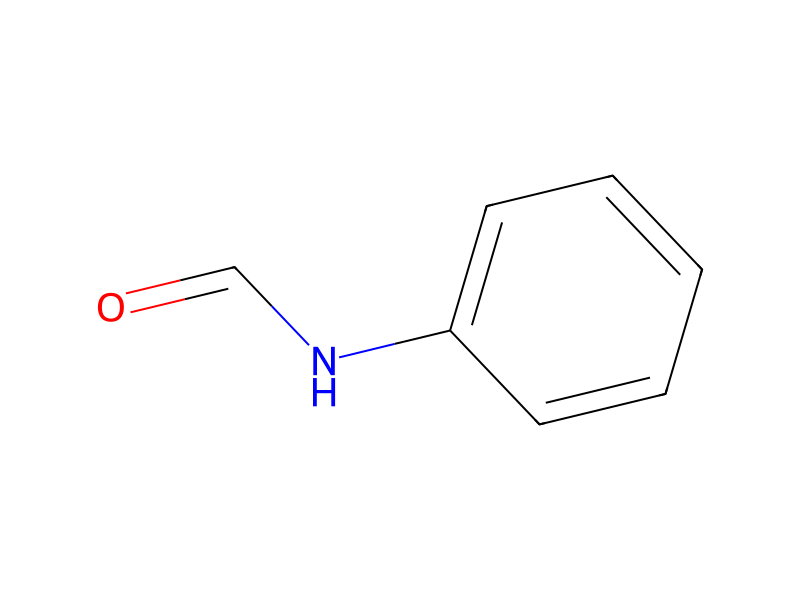

Product 1

Reagents, catalysts & solvents 1

Conditions
- Temperature
- 140 °C
Procedure
To the resulting slurry of cesium formanilide is added 63 parts by weight (0.4 mole) of p-nitrochlorobenzene, 7.9 parts by weight (0.065 mole) of formanilide and 200 parts by weight of xylene. The reaction mixture is heated to about 140° C. over a period of about an hour and heating continued at 140°-146° for about 3 hours. Gas evolution increases rapidly at about 121° C. and continues throughout most of the heating period. During the heating, the major proportion of the hydrocarbon solvent is removed as distillate. The reaction mixture is washed with water and then xylene is added at 90° C. The organic layer is separated and dried. From the organic layer 54.6 parts by weight (0.255 mole) of 4-nitrodiphenylamine is isolated by crystallization. From the brown mother liquor another 0.041 moles is obtained. The yield is 74.1% and conversion 80.3%.
Workup
- temperatureheating
- temperatureGas evolution increases rapidly at about 121° C.
- customDuring the heating, the major proportion of the hydrocarbon solvent is removed as distillate
- washThe reaction mixture is washed with water
- additionxylene is added at 90° C
- customThe organic layer is separated
- customdried
Sources & evidence
- ORD record
- ord-d551e29d428e4272889ca8159c4c2c13
- Source dataset
- uspto-grants-1980_02
- Patent number
- US04187248
Reaction notes
Loading…