Dichloromethane → Ethyl 2-Trifluoromethyl-2-methylhexanoate
Reaction equation

[C:1](C(C)(CCCC)C(O)=O)(OCC)=O.ClCCl.F.[F:19][C:20]([F:32])([F:31])[CH:21]([CH2:27][CH2:28][CH2:29][CH3:30])[C:22]([O:24][CH2:25][CH3:26])=[O:23]>CCCCC>[F:19][C:20]([F:31])([F:32])[C:21]([CH3:1])([CH2:27][CH2:28][CH2:29][CH3:30])[C:22]([O:24][CH2:25][CH3:26])=[O:23]Participants

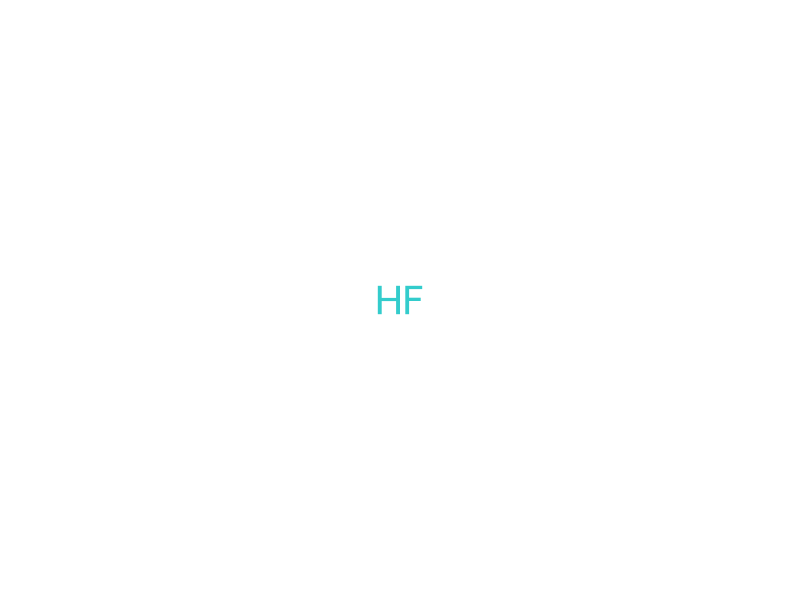


Conditions
- Temperature
- 60 °C
Procedure
To a 90 ml. stainless steel bomb was added 6.6 g. of 2-carboethoxy-2-methylhexanoic acid, 5 ml. of dichloromethane, and 0.4 ml. of 48% hydrofluoric acid. The bomb was sealed with an assembly consisting of a rupture disk (2400-3600 psig) and a needle valve. The bomb was then cooled in a dry ice-acetone bath and evacuated to less than 10 mmHg pressure. Sulfur tetrafluoride (15 g.) was condensed into the bomb from an attached lecture bottle. The needle valve was closed and the bomb was stored in a hood at room temperature for 3 days. After this time, the bomb was immersed to 1/3 of its length in a 60° C. bath. After warming at 60° C. for 3 days, the bomb was cooled and vented. The residual materials were taken up in pentane (250 ml.). The pentane solution was dried (NaF/MgSO4), filtered and distilled to give 3.14 g. (42%) of ethyl 2-trifluoromethylhexanoate, b.p. 79°-81° /20 mmHg.
Workup
- customThe bomb was sealed with
- temperatureThe bomb was then cooled in a dry ice-acetone bath
- customevacuated to less than 10 mmHg pressure
- customcondensed into the bomb from an attached lecture bottle
- customThe needle valve was closed
- customwas immersed to 1/3 of its length in a 60° C.
- temperaturethe bomb was cooled
- dry with materialThe pentane solution was dried (NaF/MgSO4)
- filtrationfiltered
- distillationdistilled
- customto give 3.14 g
Sources & evidence
- ORD record
- ord-7bd79f91b63f439bb6c3d277bb08c6f3
- Source dataset
- uspto-grants-1980_02
- Patent number
- US04190587
Reaction notes
Loading…