Sodium Iodide → Methyl 3-(2-hydroxyethoxy)-4-nitrobenzoate
Reaction equation

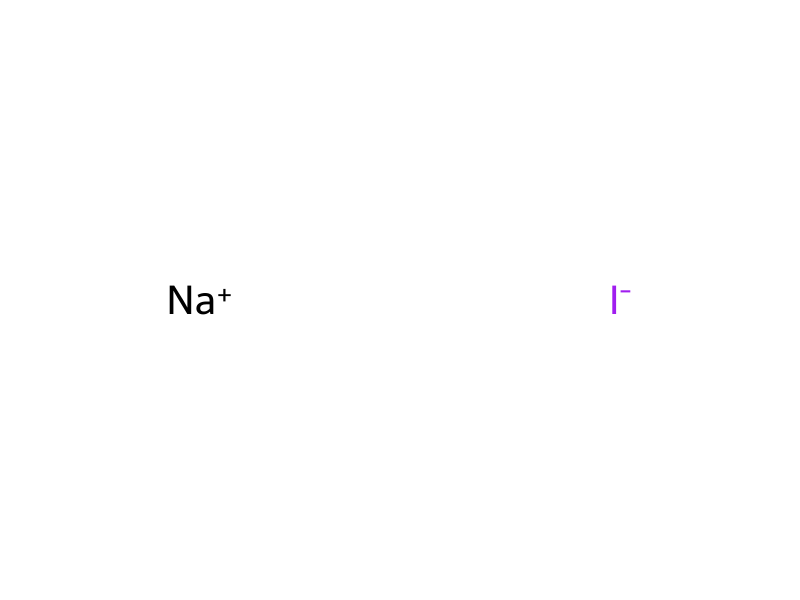
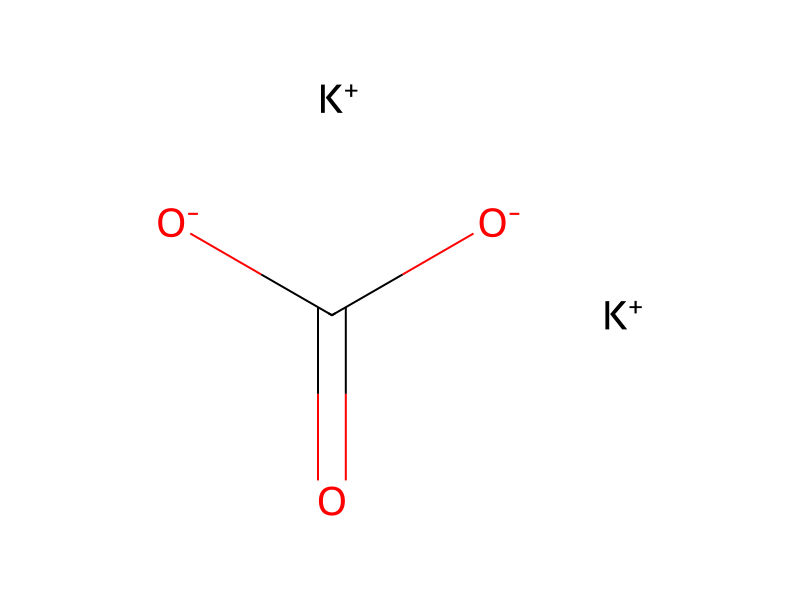
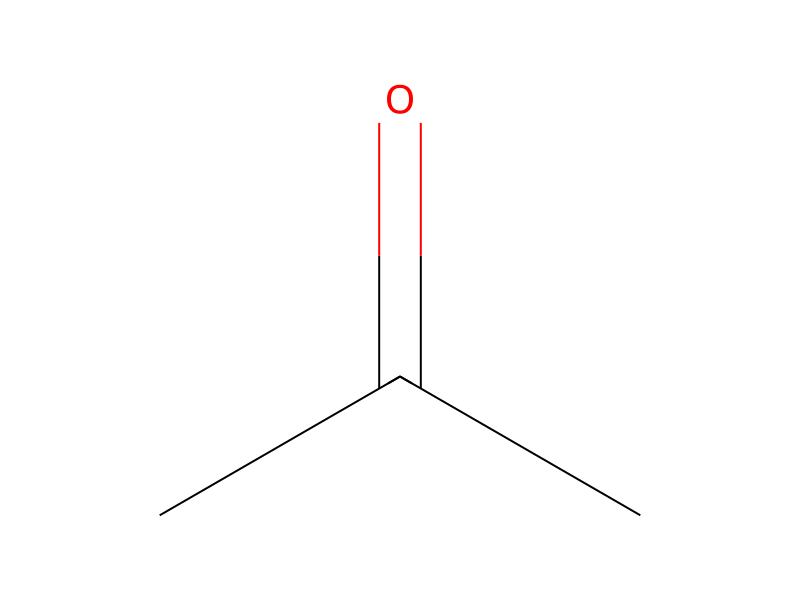
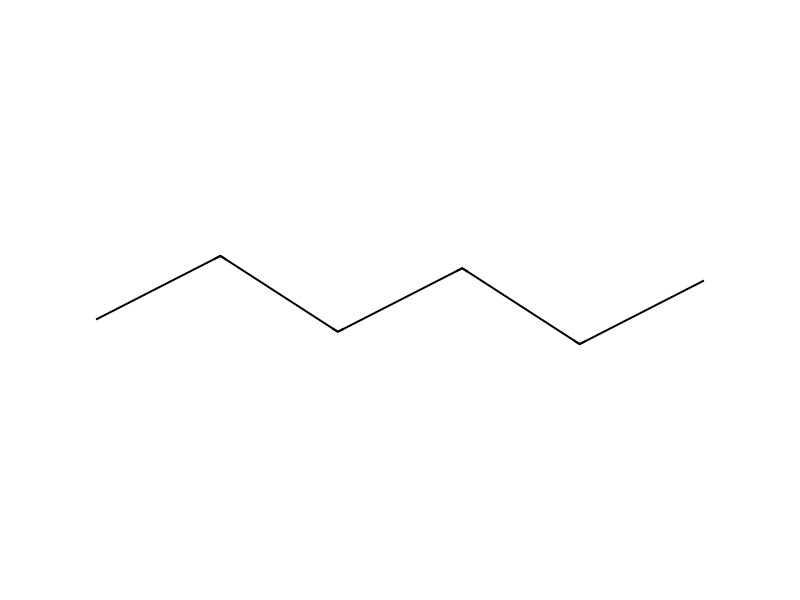
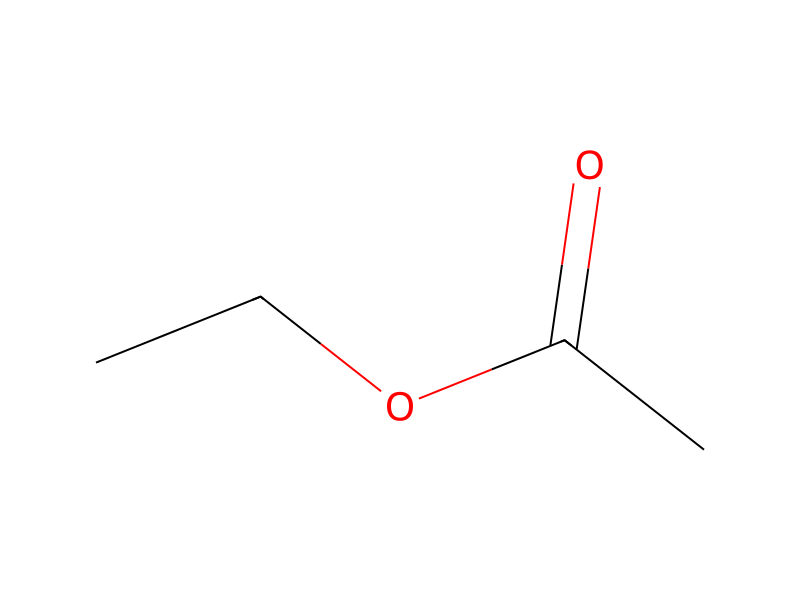
[OH:1][C:2]1[CH:3]=[C:4]([CH:9]=[CH:10][C:11]=1[N+:12]([O-:14])=[O:13])[C:5]([O:7][CH3:8])=[O:6].C(=O)([O-])[O-].[K+].[K+].[I-].[Na+].Br[CH2:24][CH2:25][OH:26]>CC(C)=O.O.C(OCC)(=O)C.CCCCCC>[OH:26][CH2:25][CH2:24][O:1][C:2]1[CH:3]=[C:4]([CH:9]=[CH:10][C:11]=1[N+:12]([O-:14])=[O:13])[C:5]([O:7][CH3:8])=[O:6]Participants
Reactant 4


Product 1

Reagents, catalysts & solvents 4
Procedure
To methyl 3-hydroxy-4-nitrobenzoate (Dictionary of Organic Compounds, Heilbron, I.; Brunburg, H. M., Eds.; Vol. 3; 1953, Oxford University Press: New York, N.Y.; p 700) (5.0 g, 0.0254 mol) dissolved in acetone (50 mL) was added potassium carbonate (4.3 g, 0.0300 mol), sodium iodide (0.375 g, 0.0025 mol), and 2-bromoethanol (3.44 g, 0.0275 mol). After refluxing for 60 h, thin-layer chromatographic analysis (SiO2, 3:2 hexane:ethyl acetate) showed partial disappearance (50%) of the starting material along with the formation (50%) of a new, lower-running spot (Rf =0.2). To the reaction mixture, additional potassium carbonate (4.3 g, 0.0300 mol), sodium iodide (0.375 g, 0.0025 mol), and 2-bromoethanol (3.44 g, 0.0275 mol) were added. After refluxing for 24 h more, thin-layer chromatographic analysis (SiO2, 3:2 hexane:ethyl acetate) showed increased disappearance of the starting material along with the formation (70%) of a lower-running spot (Rf =0.2). One-half of the reaction was poured into water (200 mL) and then extracted three times with 100-mL portions of ethyl acetate. The organic layer was concentrated and the residue recrystallized from ethyl acetate-hexane. The material was collected by filtration and dried in vacuo at acetone reflux to give 0.878 g (14%) of methyl 3-(2-hydroxyethoxy)-4-nitrobenzoate as an orange solid, mp 97°-98° C.
Workup
- temperatureAfter refluxing for 60 h
- temperatureAfter refluxing for 24 h more
- extractionextracted three times with 100-mL portions of ethyl acetate
- concentrationThe organic layer was concentrated
- customthe residue recrystallized from ethyl acetate-hexane
- filtrationThe material was collected by filtration
- dry with materialdried in vacuo at acetone
- temperaturereflux
Sources & evidence
- ORD record
- ord-7fb301664a94455182a5a1fe40b1f260
- Source dataset
- uspto-grants-1997_02
- Patent number
- US05602277
Reaction notes
Loading…