Potassium Carbonate → HCID 10361909, compound
Reaction equation

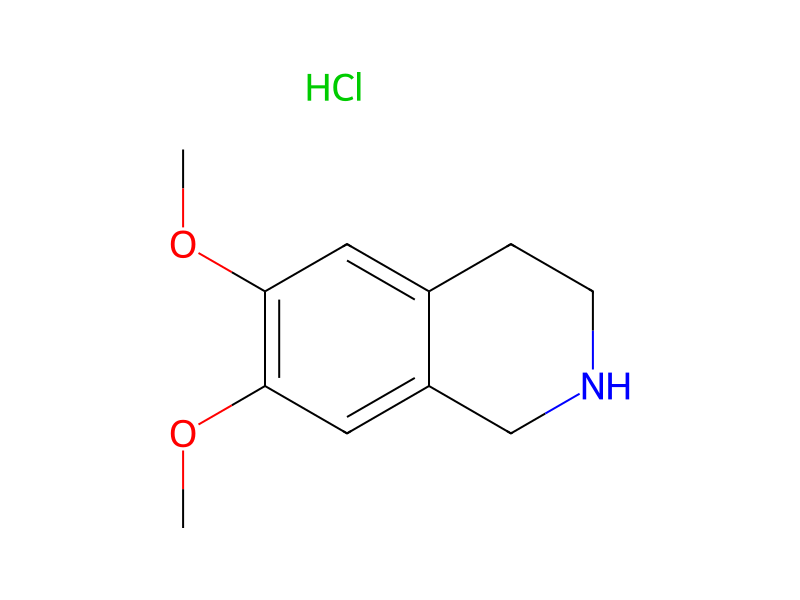
Br[CH2:2][CH2:3][CH2:4][O:5][C:6]1[CH:11]=[CH:10][C:9]([N+:12]([O-:14])=[O:13])=[CH:8][CH:7]=1.Cl.[CH3:16][O:17][C:18]1[CH:19]=[C:20]2[C:25](=[CH:26][C:27]=1[O:28][CH3:29])[CH2:24][NH:23][CH2:22][CH2:21]2.C(=O)([O-])[O-].[K+].[K+]>CN(C=O)C>[CH3:16][O:17][C:18]1[CH:19]=[C:20]2[C:25](=[CH:26][C:27]=1[O:28][CH3:29])[CH2:24][N:23]([CH2:2][CH2:3][CH2:4][O:5][C:6]1[CH:11]=[CH:10][C:9]([N+:12]([O-:14])=[O:13])=[CH:8][CH:7]=1)[CH2:22][CH2:21]2Participants
5




Procedure
A mixture of 1-(3-bromopropoxy)-4-nitrobenzene (10 g), 1,2,3,4-tetrahydro-6,7-dimethoxyisoquinoline hydrochloride (8.8 g) and potassium carbonate (10.6 g) in DMF (100 ml) was heated at 100° for 16 h. The mixture was then filtered and the filtrate evaporated. The residue was taken up in water and extracted with dichloromethane. The organic layer was washed with water, dried, and evaporated to give an oil which crystallised in ether to give the title compound (11.3 g), m.p. 100°.
Workup
- temperaturewas heated at 100° for 16 h
- filtrationThe mixture was then filtered
- customthe filtrate evaporated
- extractionextracted with dichloromethane
- washThe organic layer was washed with water
- customdried
- customevaporated
- customto give an oil which
- customcrystallised in ether
Sources & evidence
- ORD record
- ord-ca46219a13b54da39dd6280e340590a1
- Source dataset
- uspto-grants-1997_02
- Patent number
- US05604237
Reaction notes
Loading…