Aniline → Quinazoline
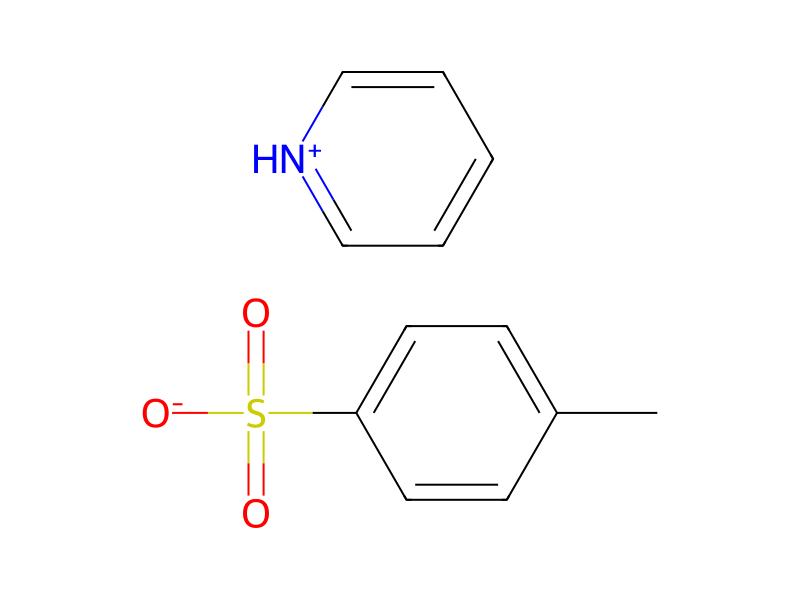
Reaction equation

Cl.[NH2:2][C:3]1[CH:8]=[CH:7][CH:6]=[CH:5][CH:4]=1.NC1C=CC=CC=1.C1(C)C=CC(S([O-])(=O)=O)=CC=1.[NH+:27]1[CH:32]=CC=C[CH:28]=1>>[N:2]1[C:3]2[C:8](=[CH:7][CH:6]=[CH:5][CH:4]=2)[CH:32]=[N:27][CH:28]=1Participants



Procedure
With reference to Scheme 1 following, the present compounds are generally prepared by reaction of indole 1 and Meldrum's acid 2 and an aldehyde RCHO (formaldehyde, R=H) in the presence of proline [Diane S. Farlow, Michael E. Flaugh, Sharon D. Horvath, Edward R. Lavagnino, and Paul Pranc, Organic Preparations and Procedures Int. 13(1), 39 (1981)] to provide condensation adduct 3 which can be converted directly using Route C to quinazoline I by reaction with an o-aminobenzanilide 4 in the presence of pyridinium p-toluenesulfonate (PPTS) in refluxing pyridine. Alternatively, via Route A condensation adduct 3 can be decarboxylated in aqueous pyridine in the presence of copper powder to provide the intermediate indolylpropionic acid 5. The latter reacts with a methyl anthranilate 6 to form ester 7. Hydrolysis of ester 7 provides the corresponding carboxylic acid 8 which reacts at elevated temperature with an aniline hydrochloride via Route D or with an aniline in the presence of PPTS [Route E] to provide quinazoline I. Intermediate acid 8 can be prepared directly from adduct 3 by reaction with an anthranilic acid 9 in refluxing pypidine [Route B]. ##STR2##
Sources & evidence
- ORD record
- ord-c98c1d7f87934bfd8cf352006d08679e
- Source dataset
- uspto-grants-1991_12
- Patent number
- US05075313
Reaction notes
Loading…