Pyridine → HCID 10522118, compound
Reaction equation

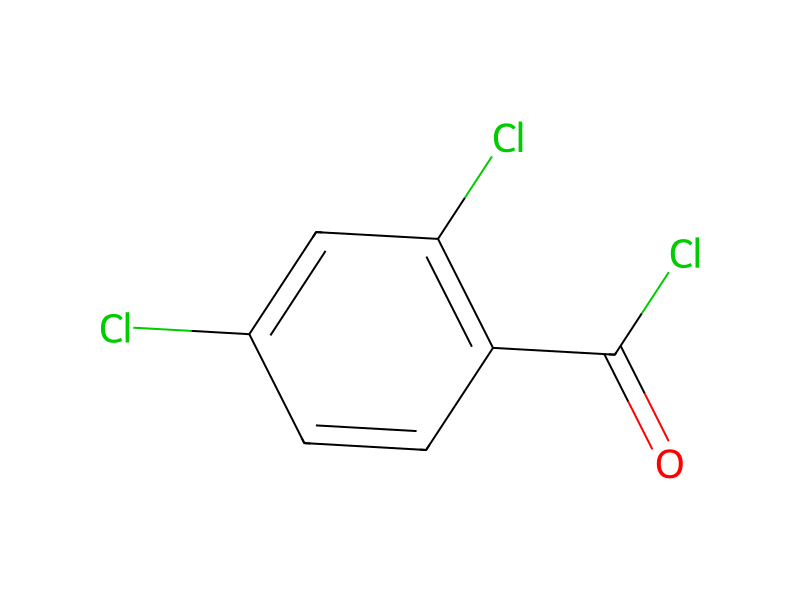
[Cl:1][C:2]1[CH:3]=[C:4]2[C:9](=[CH:10][CH:11]=1)[NH:8][CH2:7][CH2:6][C:5]2=[O:12].N1C=CC=CC=1.O1CCOCC1.[Cl:25][C:26]1[CH:34]=[C:33]([Cl:35])[CH:32]=[CH:31][C:27]=1[C:28](Cl)=[O:29]>ClCCl.O>[Cl:1][C:2]1[CH:3]=[C:4]2[C:9](=[CH:10][CH:11]=1)[N:8]([C:28](=[O:29])[C:27]1[CH:31]=[CH:32][C:33]([Cl:35])=[CH:34][C:26]=1[Cl:25])[CH2:7][CH2:6][C:5]2=[O:12]Participants






Procedure
To a mixture of 6-chloro-2,3-dihydro-4(1H)-quinolinone (20 g), pyridine (26 g) and dioxane (200 ml) was added 2,4-dichlorobenzoylchloride (30 g) dropwise under cooling at 0° C. to 5° C. with stirring. The mixture was allowed to react at room temperature for additional 3 hours. The reaction mixture was poured into 500 ml of water, then shaken with dichloromethane (1000 ml). The organic layer was washed once with 1 N HCl (100 ml), twice with water (200 ml each) then once with saturated aqueous NaCl solution (200 ml) and dried over anhydrous sodium sulfate. Dichloromethane was removed in vacuo and the residue was recrystallized with dichloromethane and n-hexane to obtain 6-chloro-1-(2,4-dichlorobenzoyl)-2,3-dihydro-4(1H)-quinolinone (yield 35 g) as white crystal.
Workup
- temperatureunder cooling at 0° C. to 5° C.
- customto react at room temperature for additional 3 hours
- washThe organic layer was washed once with 1 N HCl (100 ml), twice with water (200 ml each)
- dry with materialonce with saturated aqueous NaCl solution (200 ml) and dried over anhydrous sodium sulfate
- customDichloromethane was removed in vacuo
- customthe residue was recrystallized with dichloromethane and n-hexane
Sources & evidence
- ORD record
- ord-dd35905d2d0c46d3a727aef7d3381928
- Source dataset
- uspto-grants-1991_12
- Patent number
- US05077410
Reaction notes
Loading…