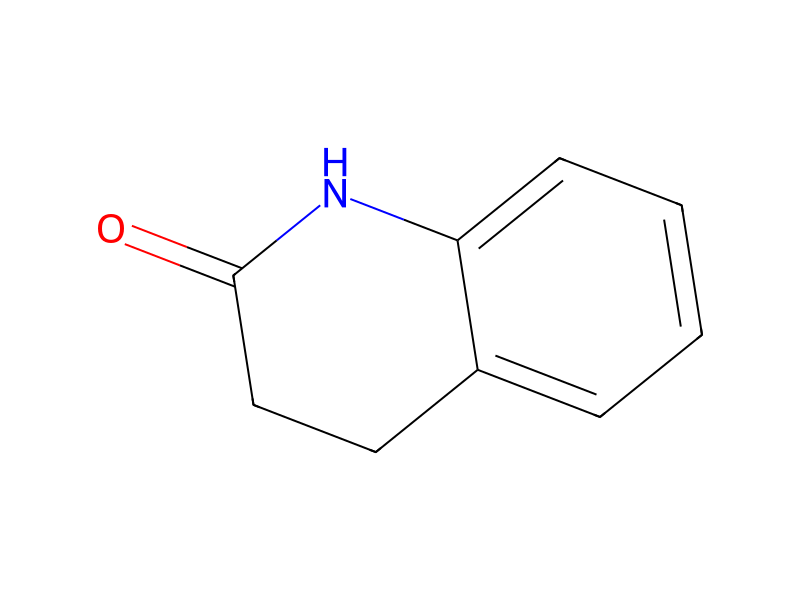
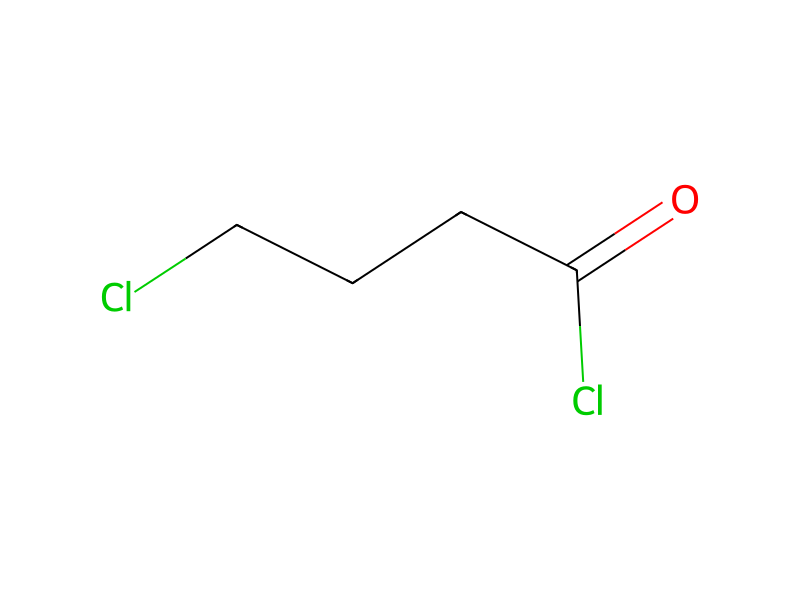
Hydrocarbostyril → 6-(4-Chlorobutyryl)-3,4-dihydrocarbostyril
Reaction equation

[Cl:1][CH2:2][CH2:3][CH2:4][C:5](Cl)=[O:6].[Cl-].[Al+3].[Cl-].[Cl-].[NH:12]1[C:22]2[C:17](=[CH:18][CH:19]=[CH:20][CH:21]=2)[CH2:16][CH2:15][C:13]1=[O:14]>C(=S)=S>[Cl:1][CH2:2][CH2:3][CH2:4][C:5]([C:19]1[CH:18]=[C:17]2[C:22](=[CH:21][CH:20]=1)[NH:12][C:13](=[O:14])[CH2:15][CH2:16]2)=[O:6]Participants
Reactant 3

Product 1

Reagents, catalysts & solvents 1

Procedure
120 Milliliters of γ-chlorobutyryl chloride and 160 g of pulverized anhydrous aluminium chloride were suspended in 300 ml of carbon disulfide. The suspension was refluxed by heating and another suspension of 29.4 g of 3,4-dihydrocarbostyril in 100 ml of carbon disulfide was added dropwise to the first suspension in 1 hour and the reaction was continued for 4 hours under refluxing condition by heating. After the reaction was completed, the reaction mixture was poured into ice-water and the precipitates thus formed were collected by filtration, washed with water and with ether. Then the washed precipitates were recrystallized from acetone to obtain 25.5 g of 6-(4-chloro-1-oxobutyl)-3,4-dihydrocarbostyril in yellow needle-like crystals. Melting point: 158°-160° C.
Workup
- temperatureThe suspension was refluxed
- temperatureby heating
- additionwas added dropwise to the first suspension in 1 hour
- temperatureunder refluxing condition
- temperatureby heating
- customthe precipitates thus
- customformed
- filtrationwere collected by filtration
- washwashed with water and with ether
- customThen the washed precipitates
- customwere recrystallized from acetone
Sources & evidence
- ORD record
- ord-c8eaaec3356743539f49d8ad3b77737e
- Source dataset
- uspto-grants-1984_07
- Patent number
- US04460593
Reaction notes
Loading…