Potassium Carbonate → HCID 54194955, compound
Reaction equation

[CH2:1]([CH:6]1[O:11][C:10]2[CH:12]=[CH:13][C:14]([CH:16]=O)=[CH:15][C:9]=2[CH2:8][O:7]1)[CH2:2][CH2:3][CH2:4][CH3:5].C(=O)([O-])[O-].[K+].[K+].O1CCO[CH2:26][CH2:25]1>[Br-].C([P+](C1C=CC=CC=1)(C1C=CC=CC=1)C1C=CC=CC=1)C>[CH2:1]([CH:6]1[O:11][C:10]2[CH:12]=[CH:13][C:14]([CH:16]=[CH:25][CH3:26])=[CH:15][C:9]=2[CH2:8][O:7]1)[CH2:2][CH2:3][CH2:4][CH3:5]Participants
5
Reactant 3



Product 1

Reagents, catalysts & solvents 1
Procedure
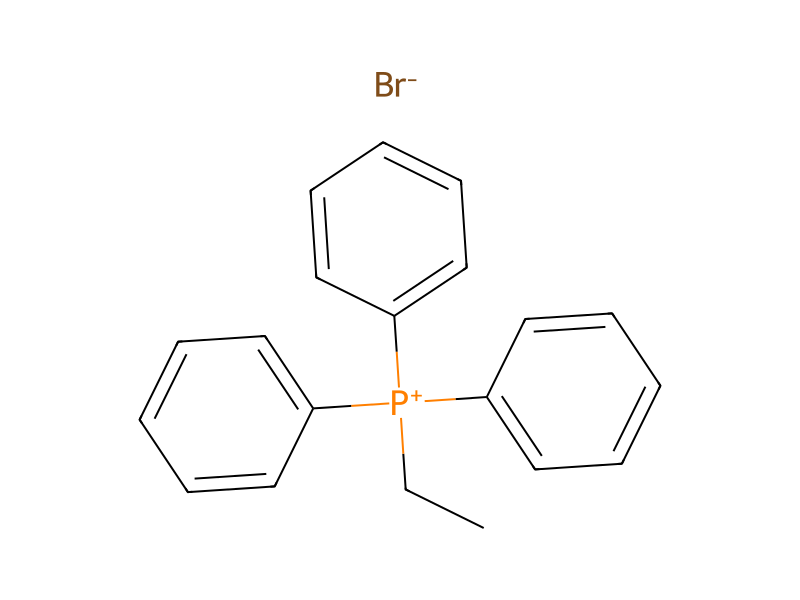
A mixture of 4.8 g of 2-pentyl-1,3-benzodioxan-6-carboxaldehyde, 100 ml of dioxan, 5 g of finely powdered potassium carbonate and 11.5 g of ethyltriphenylphosphonium bromide is heated to boiling under reflux for 24 hours. The inorganic salts are filtered off and back-washed with dioxan and the filtrate is evaporated. The residue is stirred up with hexane. Insoluble triphenylphosphine oxide is filtered off and the filtrate is evaporated. The residue is distilled at 210° C./11 mmHg in a bulb-tube. The turbid distillate is re-distilled at 130° C./0.1 mmHg in a bulb-tube. 2.5 g of crude, oily 2-pentyl-6-propenyl-1,3-benzodioxan are obtained.
Workup
- temperatureis heated
- temperatureunder reflux for 24 hours
- filtrationThe inorganic salts are filtered off
- washback-washed with dioxan
- customthe filtrate is evaporated
- filtrationInsoluble triphenylphosphine oxide is filtered off
- customthe filtrate is evaporated
- distillationThe residue is distilled at 210° C./11 mmHg in a bulb-tube
- distillationThe turbid distillate is re-distilled at 130° C./0.1 mmHg in a bulb-tube
Sources & evidence
- ORD record
- ord-5fcbddff6ab84c49b6f89bd2793a5139
- Source dataset
- uspto-grants-1984_07
- Patent number
- US04462923
Reaction notes
Loading…