Triethylamine → HCID 15055173, compound
Reaction equation

[C:1](Cl)(=[O:5])[C:2]([CH3:4])=[CH2:3].[OH:7][CH2:8][CH2:9][CH2:10][NH:11][C:12](=[O:14])[CH3:13].C(N(CC)CC)C>C(C1C=C(C)C=C(C(C)(C)C)C=1O)(C)(C)C.C(Cl)Cl>[C:1]([O:7][CH2:8][CH2:9][CH2:10][NH:11][C:12](=[O:14])[CH3:13])(=[O:5])[C:2]([CH3:4])=[CH2:3]Participants

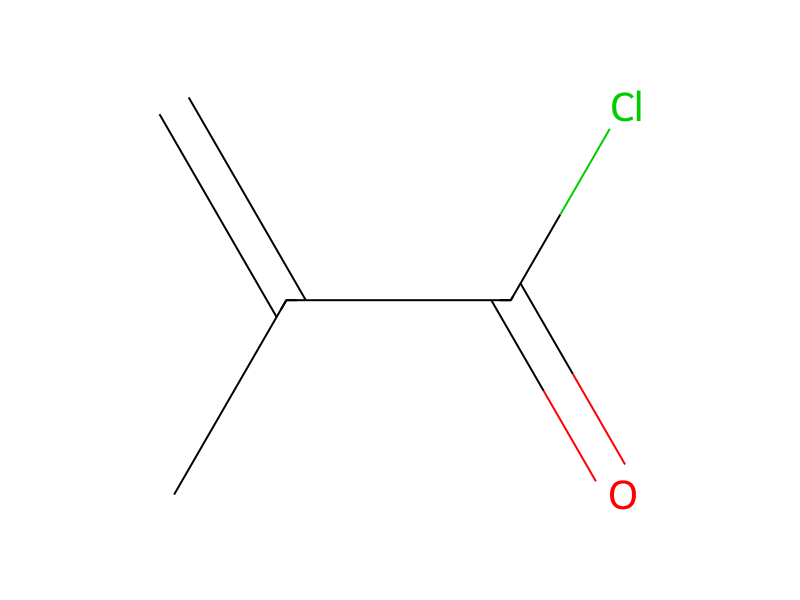



Conditions
- Temperature
- -72 °C
Procedure
184.0 g (1.76 mol) of methacryloyl chloride were added dropwise in the course of 2 hours to an initial mixture, cooled to -72° C., consisting of 206.2 g (1.76 mol) of N-(3-hydroxypropyl)-acetamide, 750 ml of methylene chloride, 228 g (2.25 mol) of triethylamine and 250 mg of 2,6-di-tert.butyl-4-methylphenol. The mixture was stirred for a further 2 hours at -52° C. and the precipitated pale precipitate was then filtered off with suction at 0° C. The filtrate was subjected to aqueous work-up and the product was dried and, after concentrating on a rotary evaporator, distilled first at 100° C., and then the residue at 130° C. (in each case 0.1 mm Hg). 174.1 g (53% of theory) of 3- acetamidopropyl methacrylate were obtained in the form of a colorless oil.
Workup
- filtrationthe precipitated pale precipitate was then filtered off with suction at 0° C
- customthe product was dried
- concentrationafter concentrating on a rotary evaporator
- distillationdistilled first at 100° C.
- customat 130° C.
Sources & evidence
- ORD record
- ord-dbee653892a94d3981ad2cabc6b45da6
- Source dataset
- uspto-grants-1994_04
- Patent number
- US05300537
Reaction notes
Loading…