Potassium Hydroxide → 1,1-Dimethylethyl 4-ethenylphenyl carbonate
Reaction equation

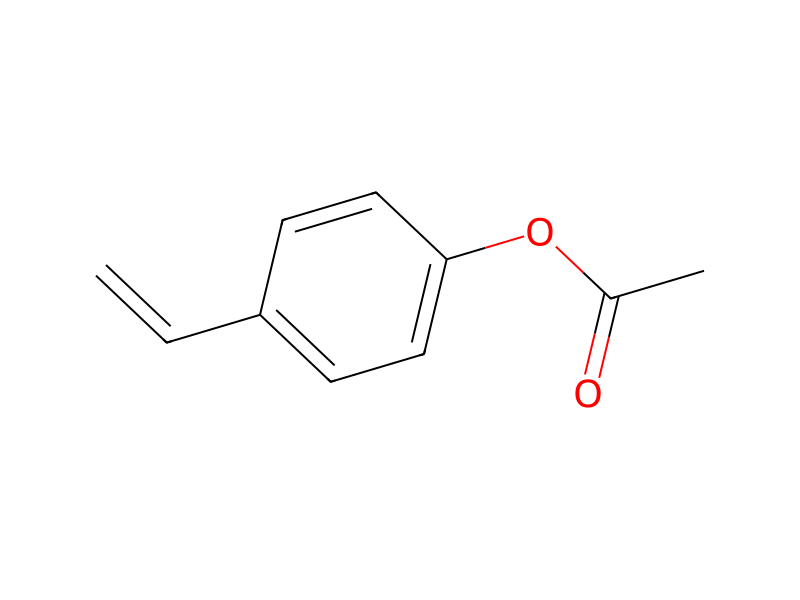
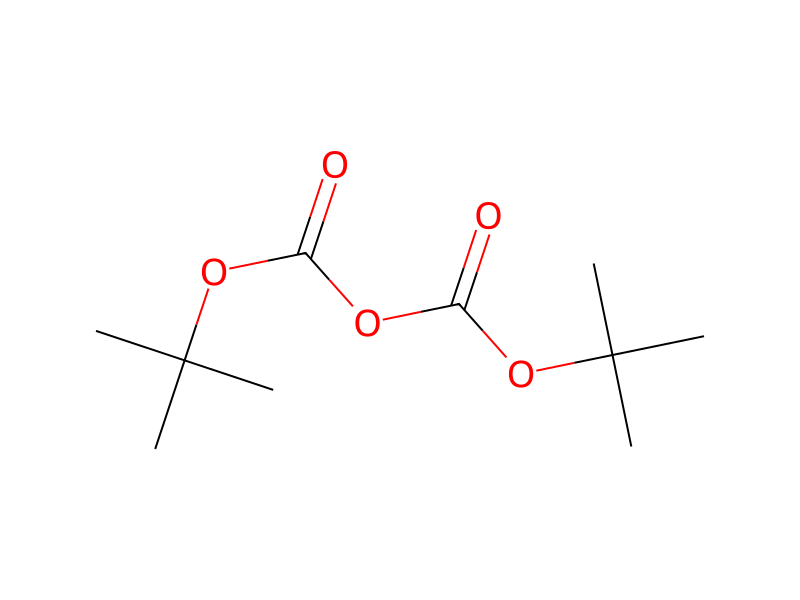
C(OC1[CH:12]=[CH:11][C:8]([CH:9]=[CH2:10])=[CH:7][CH:6]=1)(=O)C.[OH-].[K+].C(O[C:20]([O:22][C:23]([O:25][C:26]([CH3:29])([CH3:28])[CH3:27])=[O:24])=O)(C)(C)C>[OH-].[K+].CO>[C:26]([O:25][C:23]([O:22][C:20]1[CH:10]=[CH:9][C:8]([CH:11]=[CH2:12])=[CH:7][CH:6]=1)=[O:24])([CH3:27])([CH3:28])[CH3:29]Participants



Conditions
- Temperature
- 12 °C
Procedure
A solution comprising 2.4 grams of potassium hydroxide, 201 grams 4-acetoxystyrene and 500 grams of methanol was heated at reflux for 2.2 hours. The reaction was cooled to 12° C. and 64 grams potassium hydroxide pellets were added over a period of 10 minutes. After warming to 25° C., 314 grams di-tertiary-butyl-dicarbonate was introduced over a period of one hour. After an additional 2.3 hours of reaction time, the reaction slurry was washed with water and extracted with ethyl acetate. The ethyl acetate was stripped from the extraction mixture using a rotary evaporator, and the residual oil was charged with 0.26 grams phenothiazine inhibitor. Distillation at 0.1 Mm Hg yielded 227.2 grams (85% yield) 4-tertiarybutoxycarbonyloxystyrene.
Workup
- temperaturewas heated
- temperatureat reflux for 2.2 hours
- temperatureAfter warming to 25° C.
- customAfter an additional 2.3 hours of reaction time
- washthe reaction slurry was washed with water
- extractionextracted with ethyl acetate
- customa rotary evaporator
- additionthe residual oil was charged with 0.26 grams phenothiazine
- distillationDistillation at 0.1 Mm Hg
Sources & evidence
- ORD record
- ord-61b35585306c40be9cc604545fac4647
- Source dataset
- uspto-grants-1994_04
- Patent number
- US05304690
Reaction notes
Loading…