Water → HCID 58181287, compound
Reaction equation

[C:1]([N:4]1[CH2:9][CH2:8][NH:7][CH2:6][CH2:5]1)(=[O:3])[CH3:2].Br[C:11]1[S:12][CH:13]=[C:14]([Br:16])[N:15]=1.C(N(CC)CC)C.O>CN(C)C=O>[C:1]([N:4]1[CH2:9][CH2:8][N:7]([C:11]2[S:12][CH:13]=[C:14]([Br:16])[N:15]=2)[CH2:6][CH2:5]1)(=[O:3])[CH3:2]Participants
6
Reactant 4


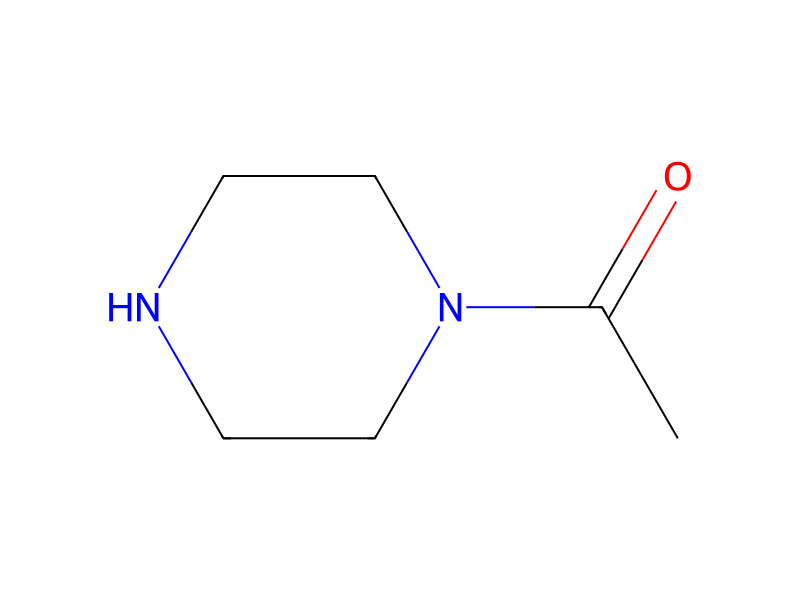

Product 1

Reagents, catalysts & solvents 1

Conditions
- Temperature
- 65 °C
Procedure
To a solution of 1-acetylpiperazine (316 mg, 4.78 mmol) and 2,4-dibromo-1,3-thiazole (900 mg, 3.71 mmol) in N,N-dimethylformamide (8 ml) was added triethylamine (0.78 ml, 5.56 mmol). The reaction mixture was stirred at 50° C. for 14 hrs and at 65° C. for 6 hrs. After cooling to room temperature, the reaction mixture was poured into water, and the mixture was extracted with ethyl acetate. The combined organic layer was washed with water and saturated brine, dried over anhydrous sodium sulfate, and concentrated. The residue was purified by silica gel column chromatography (dichloromethane:methanol=100:0→98:2) to give 1-acetyl-4-(4-bromo-1,3-thiazol-2-yl)piperazine (590 mg, yield 55%) as a pale-white brown solid.
Workup
- temperatureAfter cooling to room temperature
- extractionthe mixture was extracted with ethyl acetate
- washThe combined organic layer was washed with water and saturated brine
- dry with materialdried over anhydrous sodium sulfate
- concentrationconcentrated
- customThe residue was purified by silica gel column chromatography (dichloromethane:methanol=100:0→98:2)
Sources & evidence
- ORD record
- ord-14cc0f9311fc4591b9bef5b91ed06083
- Source dataset
- uspto-grants-2015_04
- Patent number
- US08999989B2
Reaction notes
Loading…