1-Bromo-3-chloropropane → HCID 16789618, compound
Reaction equation

[OH:1][C:2]1[CH:9]=[CH:8][C:5]([C:6]#[N:7])=[CH:4][C:3]=1[O:10][CH3:11].C(=O)([O-])[O-].[K+].[K+].[Cl:18][CH2:19][CH2:20][CH2:21]Br>CC(C)=O>[Cl:18][CH2:19][CH2:20][CH2:21][O:1][C:2]1[CH:9]=[CH:8][C:5]([C:6]#[N:7])=[CH:4][C:3]=1[O:10][CH3:11]Participants
5
Reactant 3


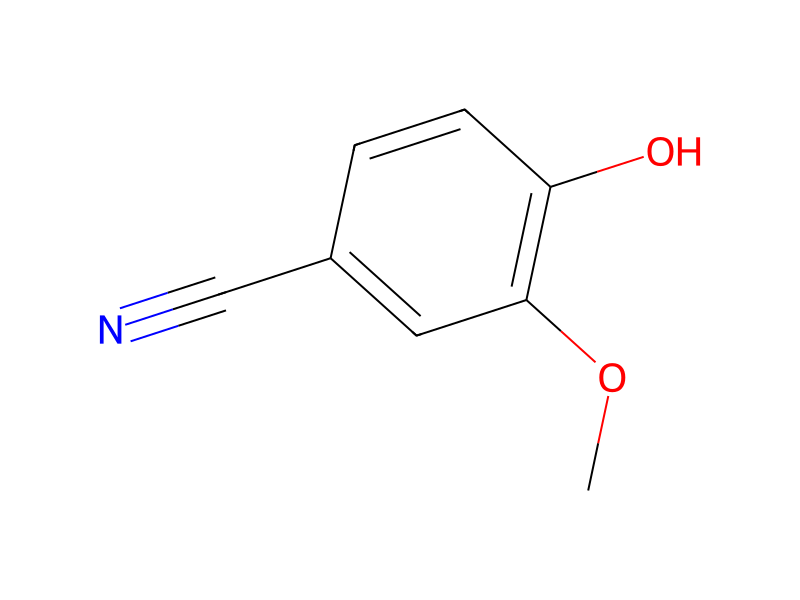
Product 1

Reagents, catalysts & solvents 1

Conditions
- Temperature
- 27.5 °C
Procedure
To 74.5 gms (0.5 mole) of 4-Hydroxy-3-methoxybenzonitrile in 450 ml. of acetone was added 138 gms (1 mole) of potassium carbonate and the resultant reaction mixture was stirred at about 25-30° C. for about 5 min. To the reaction suspension 110 gms (0.7 mole) of 3-Chloro-1-bromo propane was added drop-wise at about 25-35° C. for about 30 mins. The resultant reaction mixture was refluxed for about 12 hrs. The undissolved inorganic salts was filtered off and washed with acetone. The solvent was distilled completely under vacuum and the residue was re-crystallized from 300 ml of isopropyl alcohol to afford the title compound as white crystalline solid. Yield: 92.5 gms (% Yield: 82%).
Workup
- customthe resultant reaction mixture
- customThe resultant reaction mixture
- temperaturewas refluxed for about 12 hrs
- filtrationThe undissolved inorganic salts was filtered off
- washwashed with acetone
- distillationThe solvent was distilled completely under vacuum
- customthe residue was re-crystallized from 300 ml of isopropyl alcohol
Sources & evidence
- ORD record
- ord-bc702a238664495ab3e54bcb6ebef175
- Source dataset
- uspto-grants-2015_04
- Patent number
- US09000221B2
Reaction notes
Loading…