Water → Tris(2-carboxyethyl)phosphine
Reaction equation

S[C:2]1[CH:7]=CC=C[C:3]=1[OH:8].[C:9](/[C:11](=N/O)/[C:12]([O:14]C[C@@H]1COC(C)(C)O1)=[O:13])#N.C(N(CC)CC)C.[P:32]([O-])([O-])([O-])=O.N[C@@H](CC1C=CC=CC=1)C(=O)N[C@@H](C)C(=O)N(C)[C@@H](CC1C=CC=CC=1)C(=O)NCC(=O)N[C@@H](CC(C)C)C(=O)N[C@@H](C)C(=O)N[C@@H](C(C)C)C(=O)N[C@@H](CC1C=CC=CC=1)C(=O)N[C@H](C(=O)N([C@@H](C)C(N[C@@H](CO)C(NCC(N)=O)=O)=O)C)CC(=O)SCC1C=CC=CC=1.C(C1C=[CH:142][C:138]([C:139]([OH:141])=[O:140])=CC=1)CC.[OH2:144]>CN1CCCC1=O>[C:3]([CH2:2][CH2:7][P:32]([CH2:9][CH2:11][C:12]([OH:14])=[O:13])[CH2:142][CH2:138][C:139]([OH:141])=[O:140])([OH:8])=[O:144]Participants
Reactant 7

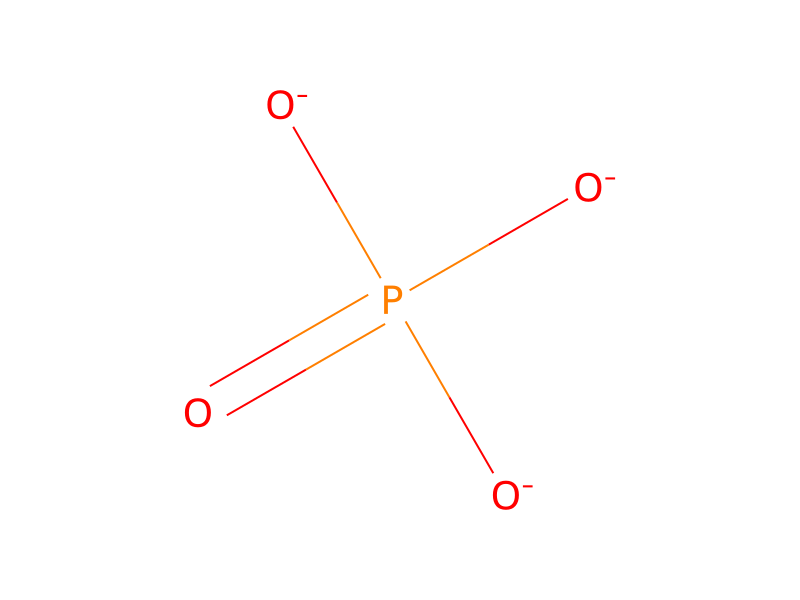



Product 1

Reagents, catalysts & solvents 1

Conditions
- Temperature
- 30 °C
Procedure
A mixed solution of water (2.46 ul), 2-mercaptophenol (5.03 ul, 0.050 mmol), (S,Z)-(2,2-dimethyl-1,3-dioxolan-4-yl)methyl 2-cyano-2-(hydroxyimino)acetate separately synthesized according to a conventional method (Organic Letter, 2012, 14, 3372-3375) (Compound SP517) (11.0 mg, 0.050 mmol), triethylamine (13.94 ul, 0.100 mmol), 1 M phosphate buffer (pH=7.7, 52.4 ul), a 0.5 M aqueous tris(2-carboxyethyl)phosphine solution (pH=7.6, 10.0 ul) and N-methylpyrrolidone (1.65 ul) was prepared. 10 ul of a 10 mM solution of S-benzyl (3S,6S,9S,12S,15S,21S,24S,27S)-27-amino-3-(((S)-1-(((S)-1-((2-amino-2-oxoethyl)amino)-3-hydroxy-1-oxopropan-2-yl)amino)-1-oxopropan-2-yl)(methyl)carbamoyl)-6,21-dibenzyl-15-isobutyl-9-isopropyl-12,22,24-trimethyl-5,8,11,14,17,20,23,26-octaoxo-28-phenyl-4,7,10,13,16,19,22,25-octaazaoctacosane-1-thioate (Compound SP-508) in N-methylpyrrolidone and a 11 mM solution of internal standard (4-propylbenzoic acid) in N-methylpyrrolidone (4.56 ul) were added to the mixed solution, and the mixture was stirred at 30° C. for 1 hour. The pH at the start of the reaction was 7.0. The time course of the reaction was observed by LCMS. After stirring for 1 hour, the masses of the title compound (SP-509), the hydrolysate (Compound SP-510) and the ester-exchanged compound (Compound SP-516) were observed to find that the mass intensity ratio (−) by LCMS is approximately 4:5:2.
Workup
- stirringAfter stirring for 1 hour
Sources & evidence
- ORD record
- ord-37b01b55df7743f8a255bd414ab4af87
- Source dataset
- uspto-grants-2016_08
- Patent number
- US09409952B2
Reaction notes
Loading…