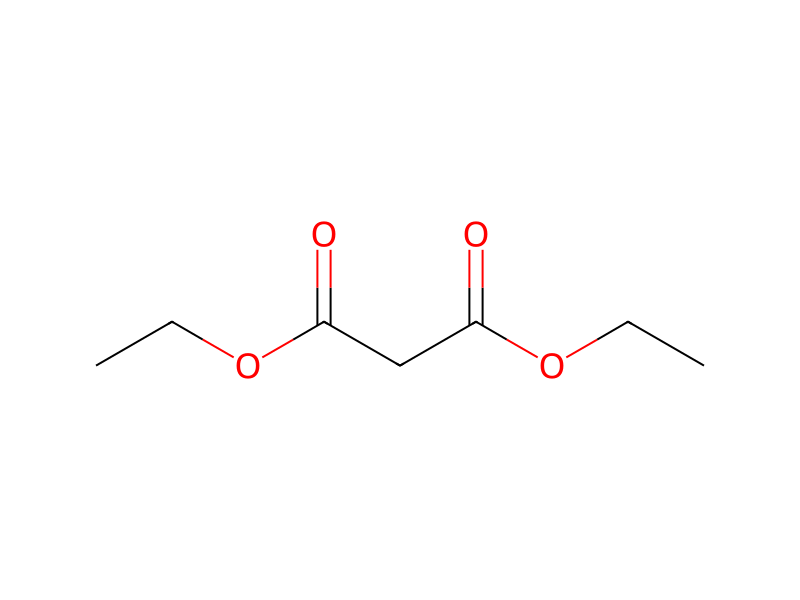
Diethyl Malonate → Triethyl propane-1,1,2-tricarboxylate
Reaction equation

[Na].[C:2]([O:10][CH2:11][CH3:12])(=[O:9])[CH2:3][C:4]([O:6][CH2:7][CH3:8])=[O:5].Br[CH:14]([CH3:20])[C:15]([O:17][CH2:18][CH3:19])=[O:16]>C(O)C>[CH:3]([C:4]([O:6][CH2:7][CH3:8])=[O:5])([C:2]([O:10][CH2:11][CH3:12])=[O:9])[CH:14]([C:15]([O:17][CH2:18][CH3:19])=[O:16])[CH3:20]Participants
Reactant 3


Product 1

Reagents, catalysts & solvents 1

Conditions
- Temperature
- 0 °C
Procedure
To a solution of anhydrous ethanol (500 mL) was added sodium (9 g, 0.39 mol) in pieces. After all the sodium dissolved, diethyl malonate (50 g, 0.31 mol) was added dropwise at 0° C., and the mixture was stirred at 0° C. for another 30 minutes, followed by the addition of (±)-ethyl 2-bromopropanoate (56.5 g, 0.31 mol) dropwise. The mixture was warmed to room temperature for 1 hour and then heated at reflux for 12 hours. After cooling to room temperature, most of solvents were removed, and the residue was diluted with ethyl acetate. The organic phase was washed by brine, dried over anhydrous sodium sulfate and evaporated to afford the product (±)-triethyl propane-1,1,2-tricarboxylate (67.8 g, yield 83.4%), which was used for the next step without purification.
Workup
- temperatureThe mixture was warmed to room temperature for 1 hour
- temperatureheated
- temperatureat reflux for 12 hours
- temperatureAfter cooling to room temperature, most of solvents
- customwere removed
- additionthe residue was diluted with ethyl acetate
- washThe organic phase was washed by brine
- dry with materialdried over anhydrous sodium sulfate
- customevaporated
Sources & evidence
- ORD record
- ord-4b891eb2f3f34917afbcce568246b571
- Source dataset
- uspto-grants-2016_08
- Patent number
- US09428508B2
Reaction notes
Loading…