Sodium hydride → 4-(4,4,5,5-Tetramethyl-1,3,2-dioxaborolan-2-yl)-1-((2-(trimethylsilyl)ethoxy)methyl)-1H-pyrazole
Reaction equation

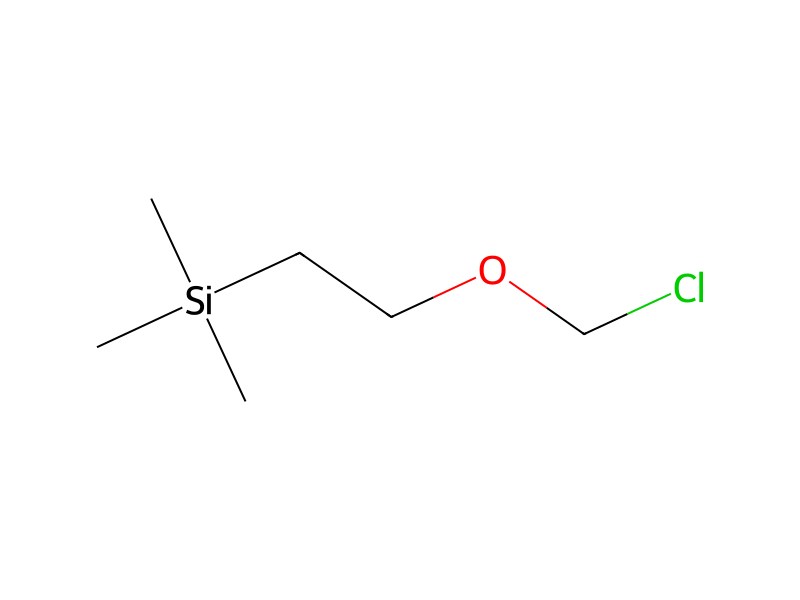
[CH3:1][C:2]1([CH3:14])[O:6][B:5]([C:7]2[CH:8]=[N:9][NH:10][CH:11]=2)[O:4][C:3]1([CH3:13])[CH3:12].[H-].[Na+].[CH3:17][Si:18]([CH2:21][CH2:22][O:23][CH2:24]Cl)([CH3:20])[CH3:19]>O1CCCC1>[CH3:12][C:3]1([CH3:13])[C:2]([CH3:14])([CH3:1])[O:6][B:5]([C:7]2[CH:8]=[N:9][N:10]([CH2:24][O:23][CH2:22][CH2:21][Si:18]([CH3:20])([CH3:19])[CH3:17])[CH:11]=2)[O:4]1Participants
5
Reactant 3


Product 1

Reagents, catalysts & solvents 1

Procedure
Into a 250-mL three neck round-bottom flask, which was purged and maintained with an inert atmosphere of nitrogen, was placed a solution of 4-(tetramethyl-1,3,2-dioxaborolan-2-yl)-1H-pyrazole (5.82 g, 30.0 mmol) in tetrahydrofuran (80 mL). This was followed by the addition of NaH (70%) (2.05 g, 85.4 mmol) in portions at 0° C. To this was added SEMCl (6.4 mL, 36.1 mmol) dropwise. The reaction mixture was stirred overnight at room temperature, then quenched with 50 mL of NH4Cl (sat). The aqueous phase was extracted with 2×100 mL of ethyl acetate and the combined organic layers were dried over anhydrous sodium sulfate and concentrated under reduced pressure. This resulted in 7 g (72%) of the title compound as colorless oil.
Workup
- customInto a 250-mL three neck round-bottom flask, which was purged
- temperaturemaintained with an inert atmosphere of nitrogen
- customquenched with 50 mL of NH4Cl (sat)
- extractionThe aqueous phase was extracted with 2×100 mL of ethyl acetate
- dry with materialthe combined organic layers were dried over anhydrous sodium sulfate
- concentrationconcentrated under reduced pressure
Sources & evidence
- ORD record
- ord-d9f7b0595e2a4f31891e27c55655fca1
- Source dataset
- uspto-grants-2016_08
- Patent number
- US09428502B2
Reaction notes
Loading…