Dichloromethane → HCID 14476476, compound
Reaction equation

[C:1]([NH:4][C:5]1[CH:6]=[C:7]([CH:9]=[CH:10][CH:11]=1)[NH2:8])(=[O:3])[CH3:2].ClCCl.[CH3:15][C:16]([CH3:21])=[CH:17][C:18](Cl)=[O:19]>C(N(CC)CC)C>[C:1]([NH:4][C:5]1[CH:11]=[CH:10][CH:9]=[C:7]([NH:8][C:18](=[O:19])[CH:17]=[C:16]([CH3:21])[CH3:15])[CH:6]=1)(=[O:3])[CH3:2]Participants
5
Reactant 3

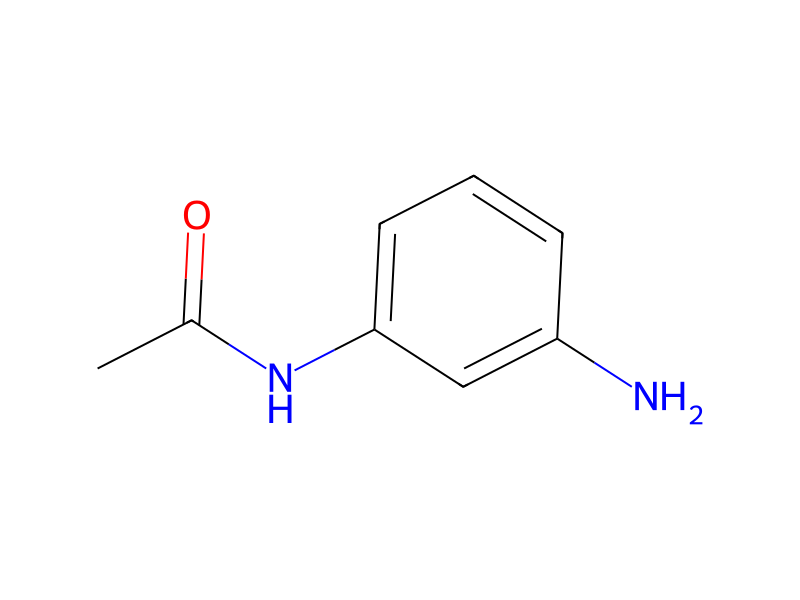

Product 1

Reagents, catalysts & solvents 1

Procedure
56.7 g. ( 0.42 mole ) 3-acetamidoaniline in 400 ml. dichloromethane and 65 ml. ( 0.46 tool ) triethylamine are mixed, while cooling with ice, with 59.0 g. (0.46 mole) 3,3-dimethylacryloyl chloride and stirred for 2 hours at ambient temperature. The solution is thereafter extracted with water and the separated organic phase is dried over anhydrous sodium sulphate, evaporated and the residue mixed with ethyl acetate. Upon standing in a refrigerator, crystals separate out. Yield 45.7 g. (47% of theory); m.p. 144°-148° C.
Workup
- temperaturewhile cooling with ice, with 59.0 g
- extractionThe solution is thereafter extracted with water
- dry with materialthe separated organic phase is dried over anhydrous sodium sulphate
- customevaporated
- additionthe residue mixed with ethyl acetate
- customseparate out
Sources & evidence
- ORD record
- ord-63ae773b3cb74f3e97e5d7dbf6a30399
- Source dataset
- uspto-grants-1994_12
- Patent number
- US05373019
Reaction notes
Loading…