Diethylene Glycol → HCID 131716352, compound
Reaction equation

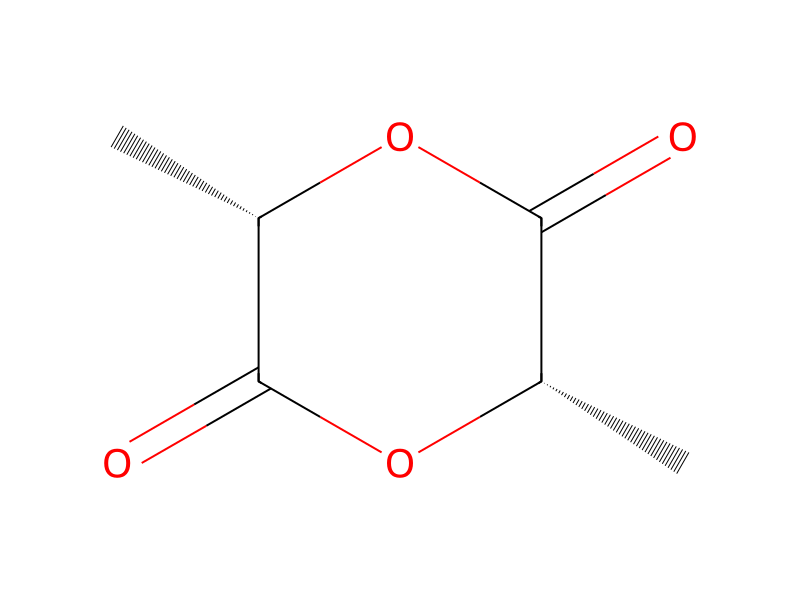
[C:1]1(=[O:7])[O:6][CH2:5][CH2:4][CH2:3][O:2]1.C(O)COCCO.C1N2CCN(CC2)C1.[CH3:23][C@@H:24]1[O:31][C:29](=[O:30])[C@H:28]([CH3:32])[O:27][C:25]1=[O:26]>>[CH3:23][C@@H:24]1[O:31][C:29](=[O:30])[C@H:28]([CH3:32])[O:27][C:25]1=[O:26].[C:1]1(=[O:7])[O:6][CH2:5][CH2:4][CH2:3][O:2]1Participants
5




Conditions
- Temperature
- 188 °C
Procedure
Polymerization grade 1,3-dioxan-2-one (trimethylene carbonate, hereafter abbreviated TMC) (97.5 g, 0.995 mole), diethylene glycol (hereafter abbreviated DEG) (4.20×10⁻² g, 4.0×10⁻⁴ mole), and Dabco T-9 catalyst (a stannous 2-ethylhexanoate catalyst formulation sold by Air Products, Inc., hereafter abbreviated T-9) (1.35×10⁻² g, 3.3×10⁻⁵ moles) were combined in a stirred reactor at 182° C. The temperature was raised to 188° C. and the mixture was stirred for 11/2 hours at this temperature. Polymerization grade l-lactide (52.5 g, 0.364 mole) was added and the temperature was increased to 200° C. After 45 minutes, the polymer was discharged from the reactor and allowed to solidify.
Workup
- custom, hereafter abbreviated T-9) (1.35×10⁻² g, 3.3×10⁻⁵ moles) were combined in a stirred reactor at 182° C
- additionwas added
- temperaturethe temperature was increased to 200° C
- waitAfter 45 minutes
Sources & evidence
- ORD record
- ord-952d1af47cfe43f287a70b72498e01ab
- Source dataset
- uspto-grants-1994_12
- Patent number
- US05376102
Reaction notes
Loading…