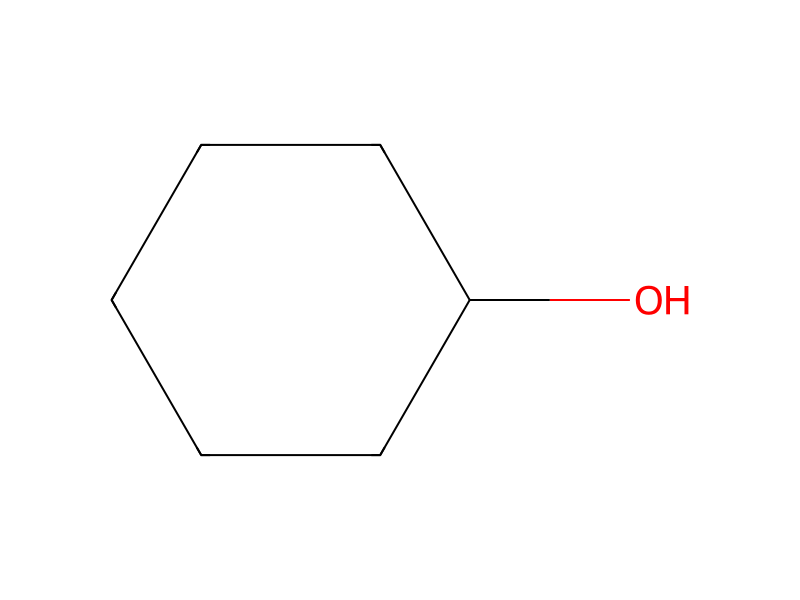
Cyclohexanol → HCID 14998077, compound
Reaction equation

[CH:1]1([OH:7])[CH2:6][CH2:5][CH2:4][CH2:3][CH2:2]1.[H-].[Na+].Cl[C:11]1[N:15]([CH3:16])[N:14]=[C:13]([CH3:17])[C:12]=1[CH:18]=[O:19]>CN(C)C=O>[CH3:16][N:15]1[C:11]([O:7][CH:1]2[CH2:6][CH2:5][CH2:4][CH2:3][CH2:2]2)=[C:12]([CH:18]=[O:19])[C:13]([CH3:17])=[N:14]1Participants
Reactant 3


Product 1

Reagents, catalysts & solvents 1

Conditions
- Temperature
- 0 °C
Procedure
Under a nitrogen gas atmosphere, 3.48 g (0.0347 mole) of cyclohexanol was added at 0° C. to 50 ml of an N,N-dimethylformamide solution containing 1.45 g (0.03625 mole) of suspended sodium hydride. The resulting mixture was stirred at 0° C. for 1 hour. Thereafter, a solution of 5 g (0.0315 mole) of 5-chloro-1,3-dimethyl-4-formylpyrazole in 20 ml of N,N-dimethylformamide was added dropwise at 20° C. over 1 hour. The reaction mixture was stirred at 20° C. for 5 hours. The reaction mixture was then poured into 300 ml of ice water and extracted with two 100-ml portions of ethyl acetate. The organic layers were combined, washed once with 100 ml of a saturated aqueous sodium chloride solution, and dried over anhydrous magnesium sulfate, then concentrated under reduced pressure. The residue was subjected to column chromatography on silica gel to obtain 0.3 g of 1,3-dimethyl-5-cyclohexyloxy-4-formylpyrazole.
Workup
- stirringThe reaction mixture was stirred at 20° C. for 5 hours
- extractionextracted with two 100-ml portions of ethyl acetate
- washwashed once with 100 ml of a saturated aqueous sodium chloride solution
- dry with materialdried over anhydrous magnesium sulfate
- concentrationconcentrated under reduced pressure
Sources & evidence
- ORD record
- ord-2665bd9562c84e8690dbf54b55eb9d15
- Source dataset
- uspto-grants-1991_06
- Patent number
- US05021446
Reaction notes
Loading…