Dimethylformamide → Methyl 4-cyano-2-methylbenzoate
Reaction equation

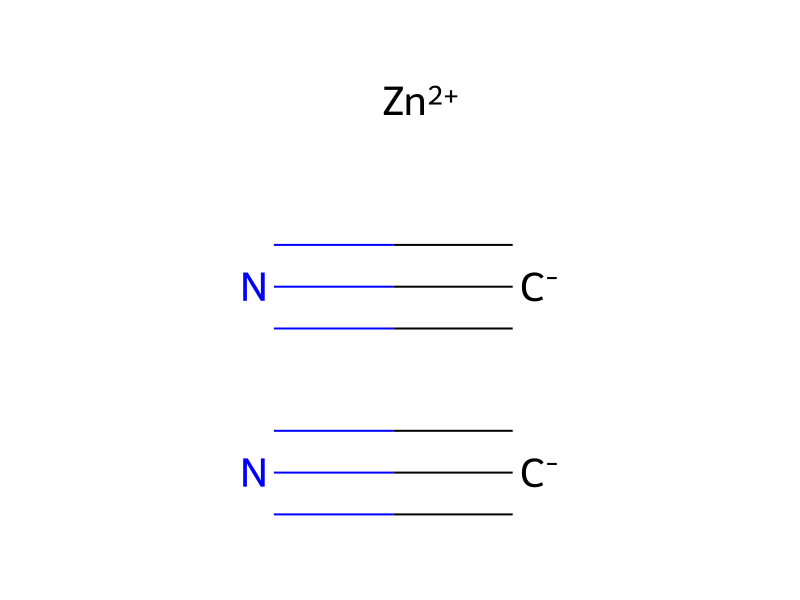
Br[C:2]1[CH:11]=[CH:10][C:5]([C:6]([O:8][CH3:9])=[O:7])=[C:4]([CH3:12])[CH:3]=1.[CH3:13][N:14](C)C=O>[C-]#N.[Zn+2].[C-]#N.C1C=CC([P]([Pd]([P](C2C=CC=CC=2)(C2C=CC=CC=2)C2C=CC=CC=2)([P](C2C=CC=CC=2)(C2C=CC=CC=2)C2C=CC=CC=2)[P](C2C=CC=CC=2)(C2C=CC=CC=2)C2C=CC=CC=2)(C2C=CC=CC=2)C2C=CC=CC=2)=CC=1>[C:13]([C:2]1[CH:11]=[CH:10][C:5]([C:6]([O:8][CH3:9])=[O:7])=[C:4]([CH3:12])[CH:3]=1)#[N:14]Participants




Conditions
- Temperature
- 140 °C
Procedure
A mixture of methyl 4-bromo-2-methylbenzoate (1 g, 4.4 mmol), zinc cyanide (0.7 g, 6.0 mmol) and tetrakis(triphenylphosphine)palladium(0) (100 mg, 0.086 mmol) in N,N-dimethylformamide was heated to 140° C. under nitrogen atmosphere. And then the mixture stirred under reflux condition for 12 hours. The mixture was cooled to room temperature, and partitioned between dichloromethane (20 mL*3) and brine (60 mL). The organic layer was concentrated to dryness and the residue was purified by column chromatography (silica gel, petroleum ether/ethyl acetate=15:1) to give methyl 4-cyano-2-methylbenzoate as a white solid (200 mg, 26%). LRMS (M+H+) m/z: calcd 175.06. found 175. 1H NMR (300 MHz, CDCl3): δ 7.97 (d, J=8.7 Hz, 1H), 7.57-7.53 (m, 2H), 3.93 (s, 3H), 2.62 (s, 3H).
Workup
- temperatureunder reflux condition for 12 hours
- temperatureThe mixture was cooled to room temperature
- custompartitioned between dichloromethane (20 mL*3) and brine (60 mL)
- concentrationThe organic layer was concentrated to dryness
- customthe residue was purified by column chromatography (silica gel, petroleum ether/ethyl acetate=15:1)
Sources & evidence
- ORD record
- ord-f895febe88a74cdfa3ac850732c3307d
- Source dataset
- uspto-grants-2015_12
- Patent number
- US09206128B2
Reaction notes
Loading…