Pyridine → HCID 57410731, compound
Reaction equation

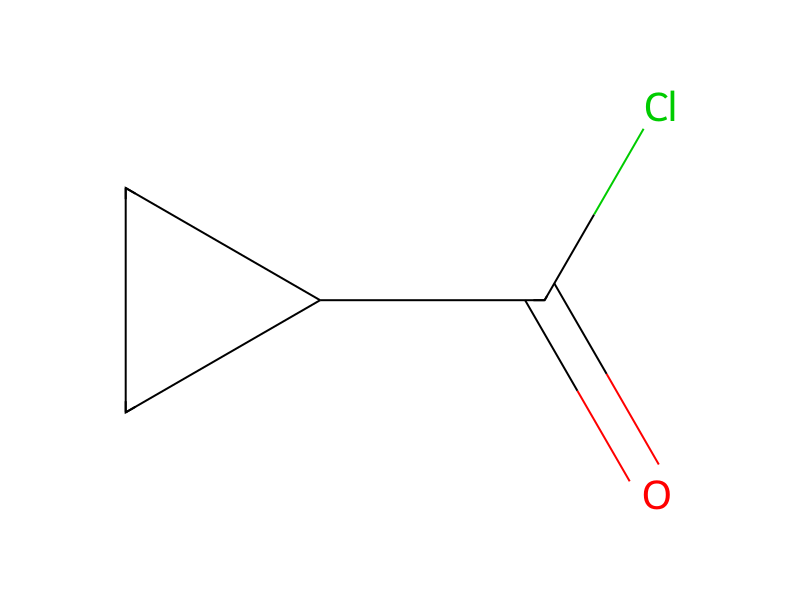
[Br:1][C:2]1[C:11]2[C:6](=[CH:7][C:8]([C:12]3[CH:17]=[C:16]([F:18])[CH:15]=[CH:14][C:13]=3[CH3:19])=[CH:9][CH:10]=2)[CH:5]=[N:4][C:3]=1[NH2:20].N1C=CC=CC=1.[CH:27]1([C:30](Cl)=[O:31])[CH2:29][CH2:28]1.C(=O)(O)[O-].[Na+]>ClCCl>[Br:1][C:2]1[C:11]2[C:6](=[CH:7][C:8]([C:12]3[CH:17]=[C:16]([F:18])[CH:15]=[CH:14][C:13]=3[CH3:19])=[CH:9][CH:10]=2)[CH:5]=[N:4][C:3]=1[NH:20][C:30]([CH:27]1[CH2:29][CH2:28]1)=[O:31]Participants
Reactant 4



Product 1

Reagents, catalysts & solvents 1

Procedure
To 4-bromo-7-(5-fluoro-2-methylphenyl)isoquinolin-3-amine (46 mg, 140 μmol) and pyridine (110 μl, 1.4 mmol) in dichloromethane (3.0 mL) at ambient temperature was added dropwise cyclopropanecarbonyl chloride (60 μl, 0.66 mmol). After 1 h the mixture was poured into saturated aqueous sodium bicarbonate, extracted twice into dichloromethane and the combined organic phases dried over sodium sulfate, filtered and concentrated in vacuo to afford a residue that was purified by reverse phase HPLC (gradient of acetonitrile in water with 0.1% formic acid) to yield the title compound as a white amorphous solid (57 mg, quant.). 1H NMR (400 MHz, DMSO) δ 10.54 (s, 1H), 9.26 (s, 1H), 8.27-8.14 (m, 2H), 7.97 (d, J=8.6 Hz, 1H), 7.49-7.33 (m, 1H), 7.21 (t, J=9.2 Hz, 2H), 2.25 (s, 3H), 1.98-1.84 (m, 1H), 0.90-0.78 (m, 4H). LCMS (Method E): RT=5.299 min, M+H+=399.0 & 401.0.
Workup
- extractionextracted twice into dichloromethane
- dry with materialthe combined organic phases dried over sodium sulfate
- filtrationfiltered
- concentrationconcentrated in vacuo
- customto afford a residue that
- customwas purified by reverse phase HPLC (gradient of acetonitrile in water with 0.1% formic acid)
Sources & evidence
- ORD record
- ord-7c001180d4c349d1a207d9db1a40e5a0
- Source dataset
- uspto-grants-2015_12
- Patent number
- US09206175B2
Reaction notes
Loading…