3,4-dihydro-2H-pyran → 4,5-dibromo-2-{4-[(tetrahydropyranyl)oxy]phenyl}-2H-pyridazin-3-one
Reaction equation

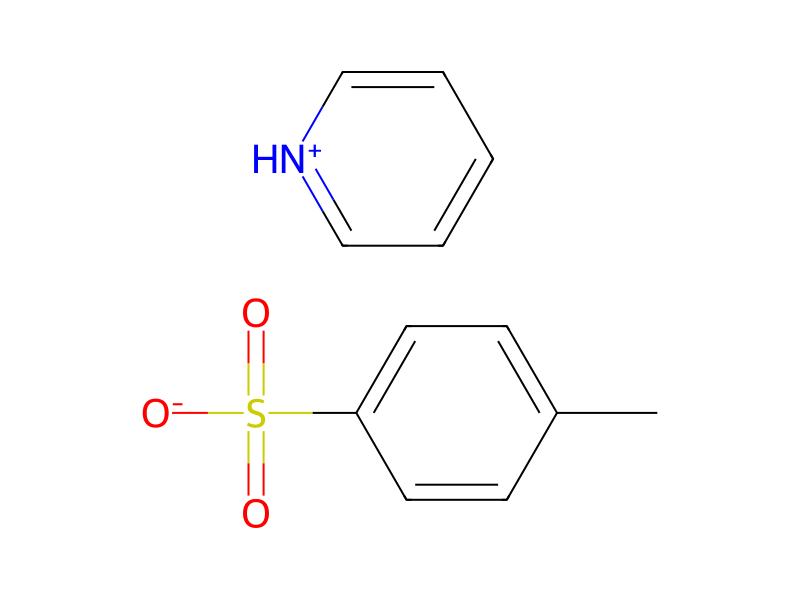
C1(C)C=CC(S([O-])(=O)=O)=CC=1.[NH+]1C=CC=CC=1.[O:18]1[CH:23]=[CH:22][CH2:21][CH2:20][CH2:19]1.[Br:24][C:25]1[C:26](=[O:39])[N:27]([C:32]2[CH:37]=[CH:36][C:35]([OH:38])=[CH:34][CH:33]=2)[N:28]=[CH:29][C:30]=1[Br:31]>ClCCl>[Br:24][C:25]1[C:26](=[O:39])[N:27]([C:32]2[CH:33]=[CH:34][C:35]([O:38][CH:23]3[CH2:22][CH2:21][CH2:20][CH2:19][O:18]3)=[CH:36][CH:37]=2)[N:28]=[CH:29][C:30]=1[Br:31]Participants
5
Reactant 3


Product 1

Reagents, catalysts & solvents 1

Procedure
A catalytic amount of pyridinium p-toluenesulfonate and 3,4-dihydro-2H-pyrane (0.8 mL, 8.89 mmols) were added to a dichloromethane (30 mL) solution of 4,5-dibromo-2-(4-hydroxyphenyl)-2H-pyridazin-3-one (1.03 g, 2.98 mmols), and stirred at room temperature for 2 hours, washed with saturated aqueous sodium bicarbonate solution and saturated brine, and dried over anhydrous potassium carbonate. Concentrating the solvent under reduced pressure, the resulting residue was crystallized from mixed solvent of ethyl acetate and hexane to provide the title compound (1.1 g, 86%).
Workup
- washwashed with saturated aqueous sodium bicarbonate solution and saturated brine
- dry with materialdried over anhydrous potassium carbonate
- concentrationConcentrating the solvent under reduced pressure
- customthe resulting residue was crystallized
- additionfrom mixed solvent of ethyl acetate and hexane
Sources & evidence
- ORD record
- ord-2d12e7bdf6a04c519d5deb44ecdd7cfa
- Source dataset
- uspto-grants-2010_06
- Patent number
- US07732456B2
Reaction notes
Loading…