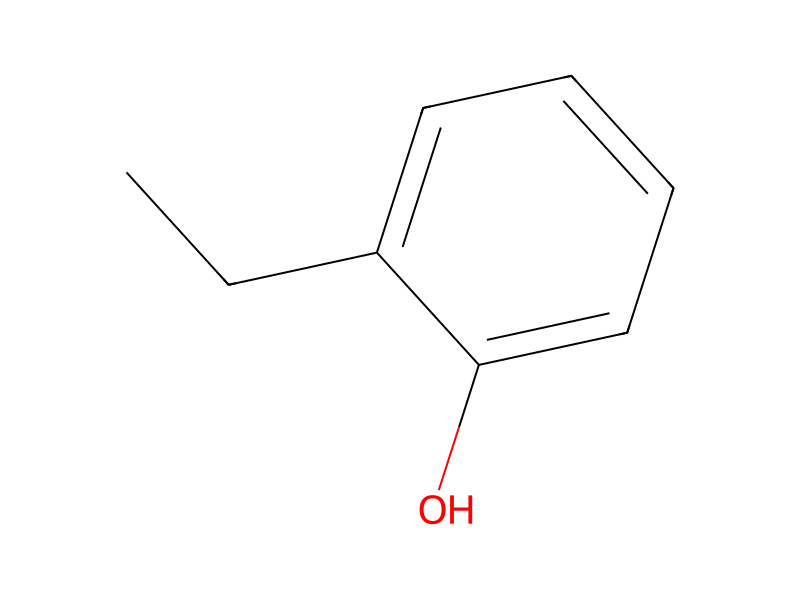
2-Ethylphenol → HCID 40541027, compound
Reaction equation

Cl[C:2]1[CH:7]=[CH:6][C:5]([N+:8]([O-:10])=[O:9])=[CH:4][N:3]=1.[CH2:11]([C:13]1[CH:18]=[CH:17][CH:16]=[CH:15][C:14]=1[OH:19])[CH3:12].C([O-])([O-])=O.[K+].[K+]>CN(C)C=O>[CH2:11]([C:13]1[CH:18]=[CH:17][CH:16]=[CH:15][C:14]=1[O:19][C:2]1[CH:7]=[CH:6][C:5]([N+:8]([O-:10])=[O:9])=[CH:4][N:3]=1)[CH3:12]Participants
5
Reactant 3


Product 1

Reagents, catalysts & solvents 1

Conditions
- Temperature
- 110 °C
Procedure
In a 20 mL microwave vial 2-chloro-5-nitropyridine (500 mg, 3.15 mmol) was dissolved in N,N-dimethylformamide (10 mL) to give a light brown solution. 2-ethylphenol (0.378 mL, 3.15 mmol) and K2CO3 (1308 mg, 9.46 mmol) were added. The reaction vessel was sealed and heated in Biotage Initiator at 110° C. for 1 hour. After cooling the reaction was complete. The reaction mixture was quenched with 10 mL of water and diluted with 10 mL of Et2O. Phases were separated through a separating funnel. The organic phase was washed with 3×10 mL of water, 10 mL of brine, dried over sodium sulphate, filtered and evaporated under vacuum to give the title compound as a pale orange oil. (623 mg).
Workup
- customto give a light brown solution
- customThe reaction vessel was sealed
- temperatureAfter cooling the reaction
- customThe reaction mixture was quenched with 10 mL of water
- additiondiluted with 10 mL of Et2O
- customPhases were separated through a separating funnel
- washThe organic phase was washed with 3×10 mL of water, 10 mL of brine
- dry with materialdried over sodium sulphate
- filtrationfiltered
- customevaporated under vacuum
Sources & evidence
- ORD record
- ord-6a0b770e6b4d4af6b663fbb8e81839ea
- Source dataset
- uspto-grants-2015_12
- Patent number
- US09216967B2
Reaction notes
Loading…