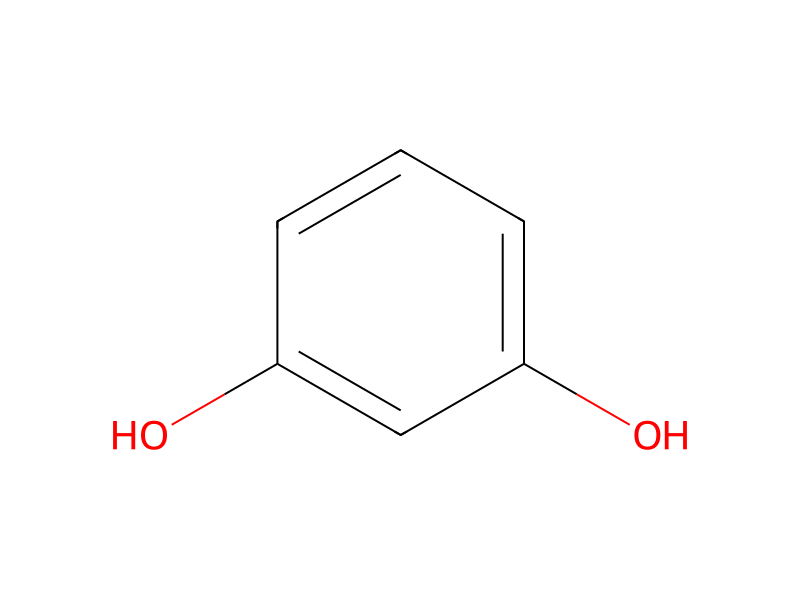
Resorcinol → 3-Chloro-1-(2,4-dihydroxyphenyl)propan-1-one
Reaction equation

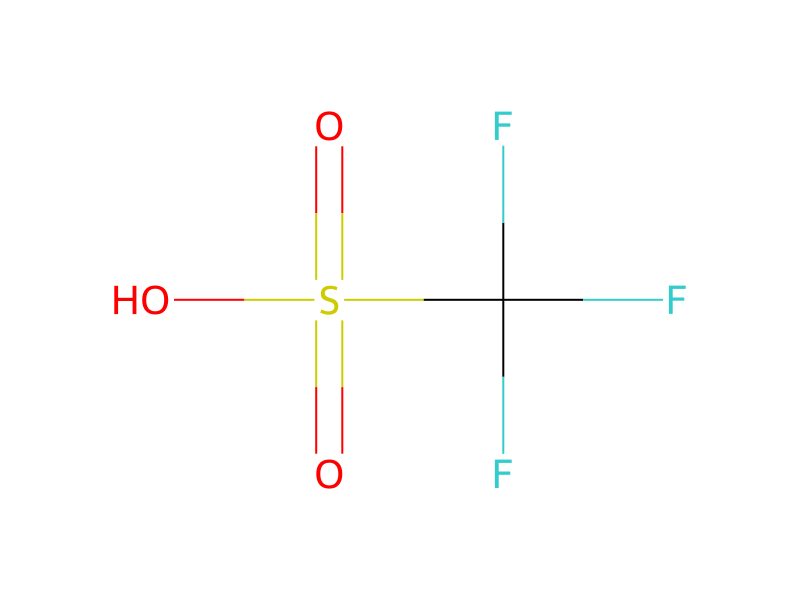
[C:1]1([CH:8]=[CH:7][CH:6]=[C:4]([OH:5])[CH:3]=1)[OH:2].[Cl:9][CH2:10][CH2:11][C:12](O)=[O:13].FC(F)(F)S(O)(=O)=O.ClCCl>O>[Cl:9][CH2:10][CH2:11][C:12]([C:6]1[CH:7]=[CH:8][C:1]([OH:2])=[CH:3][C:4]=1[OH:5])=[O:13]Participants
Reactant 4


Product 1

Reagents, catalysts & solvents 1

Conditions
- Temperature
- 80 °C
Procedure
To a stirred mixture of resorcinol (10 g, 91 mmol) and 3-chloropropanoic acid (9.95 g, 92 mmol) was added trifluoromethanesulfonic acid (50 g, 333 mmol) in one portion. The solution was warmed to 80° C. for 30 min, cooled to room temperature over 15 min, and poured into dichloromethane (200 mL). The resulting solution was slowly poured into water (200 mL), and the layers were separated. The aqueous layer was extracted with dichloromethane (2×100 mL), dried over anhydrous sodium sulfate, and filtered. Concentration under reduced pressure afforded 3-chloro-1-(2,4-dihydroxyphenyl)propan-1-one (13.62 g, 67.9 mmol, 74.8% yield) as an orange semi-solid. The compound was used without any further purification. LC/MS M+1=200; 1H NMR (400 MHz, CDCl3) δ ppm 12.39 (1H, s), 7.56 (1H, d, J=8.58 Hz), 7.19 (1H, s), 6.17-6.49 (1H, m), 5.23 (1H, s), 3.78-4.01 (2H, m), and 3.34 (2H, t, J=6.71 Hz).
Workup
- temperaturecooled to room temperature over 15 min
- customthe layers were separated
- extractionThe aqueous layer was extracted with dichloromethane (2×100 mL)
- dry with materialdried over anhydrous sodium sulfate
- filtrationfiltered
- concentrationConcentration under reduced pressure
Sources & evidence
- ORD record
- ord-e3cc1b314e474522a86bd868bbf8e0fb
- Source dataset
- uspto-grants-2015_12
- Patent number
- US09216972B2
Reaction notes
Loading…