p-Toluenesulfonic acid → HCID 178419326, compound
Reaction equation

[Br:1][C:2]1[CH:3]=[C:4]([NH2:9])[C:5]([NH2:8])=[CH:6][CH:7]=1.[CH:10]1([CH:16]=[CH:17][C:18](Cl)=O)[CH2:15][CH2:14][CH2:13][CH2:12][CH2:11]1.C1(C)C=CC(S(O)(=O)=O)=CC=1>C1(C)C=CC=CC=1>[Br:1][C:2]1[CH:7]=[CH:6][C:5]2[NH:8][C:18]([CH:17]=[CH:16][CH:10]3[CH2:15][CH2:14][CH2:13][CH2:12][CH2:11]3)=[N:9][C:4]=2[CH:3]=1Participants
Reactant 3

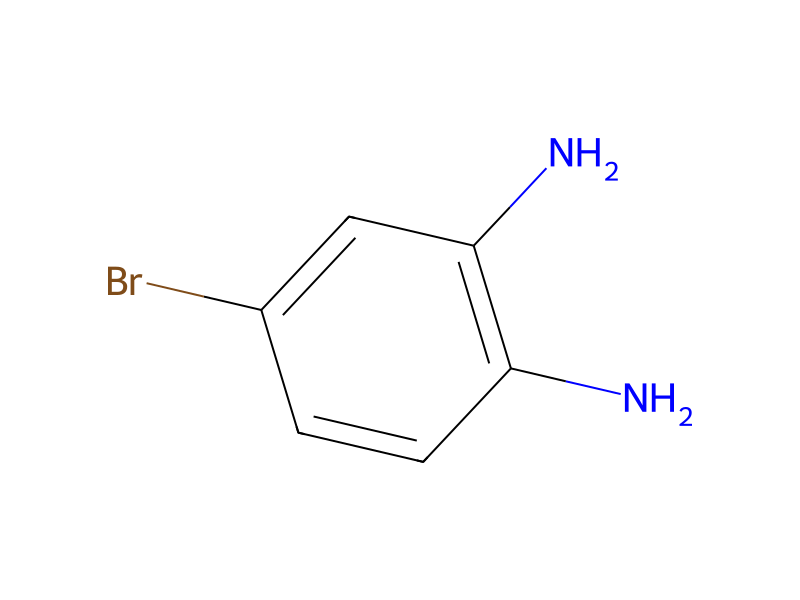

Product 1

Reagents, catalysts & solvents 1

Conditions
- Temperature
- 40 °C
Procedure
To a solution of 4-bromo-benzene-1,2-diamine (3.0 g, 16.1 mmol) in anhydrous toluene (50 ml) was added a solution of 3-cyclohexyl-acryloyl chloride (as prepared in STEP B above, 32.5 mmol) in toluene (5 ml). The resulting solution was stirred at 40° C. for 6 h. To the resulting solution was added p-toluenesulfonic acid (3.0 g, 16 mmol) and heated to reflux for 18 h. The resulting solution was concentrated. The residue obtained was partitioned between ethyl acetate and a saturated solution of sodium bicarbonate. The layers were separated. The organic layer was washed successively with saturated sodium bicarbonate, water, brine, then dried over sodium sulfate, filtered and concentrated. The residue was chromatographed using a silica gel to yield 5-bromo-2-(2-cyclohexyl-vinyl)-1H-benzoimidazole.
Workup
- customas prepared in STEP B above
- temperatureheated
- temperatureto reflux for 18 h
- concentrationThe resulting solution was concentrated
- customThe residue obtained
- customwas partitioned between ethyl acetate
- customThe layers were separated
- washThe organic layer was washed successively with saturated sodium bicarbonate, water, brine
- dry with materialdried over sodium sulfate
- filtrationfiltered
- concentrationconcentrated
- customThe residue was chromatographed
Sources & evidence
- ORD record
- ord-ff8b38192070449aae6768c8b99ed31b
- Source dataset
- uspto-grants-2012_07
- Patent number
- US08217060B2
Reaction notes
Loading…