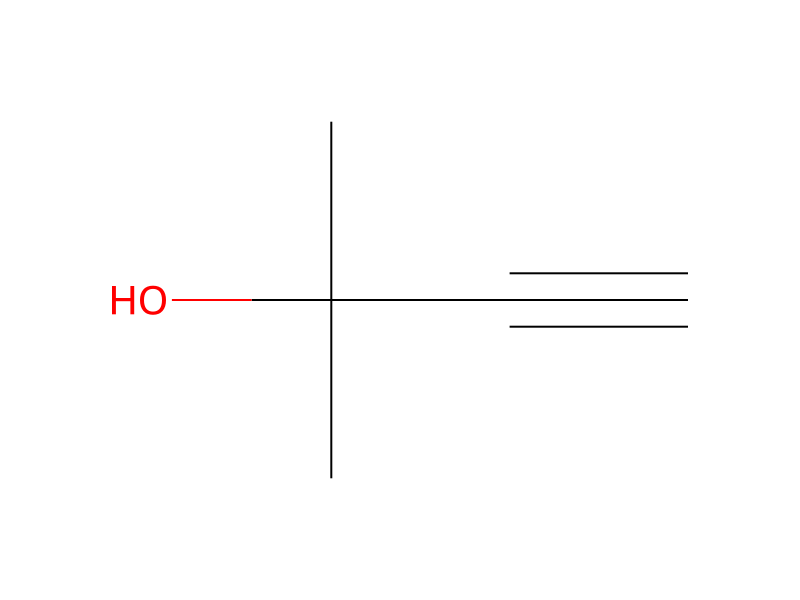
2-Methyl-3-butyn-2-ol → HCID 86637638, compound
Reaction equation

CC1C=C([C:9]2(C3C=CC(N)=C(C)C=3)[C:21]3[CH:20]=[C:19](C#C[Si](C)(C)C)[CH:18]=[CH:17][C:16]=3[C:15]3[C:10]2=[CH:11][C:12]([C:28]#[C:29][Si](C)(C)C)=[CH:13][CH:14]=3)C=CC=1N.C[Si]([C:46]#[CH:47])(C)C.CC(O)(C#C)C.CC1C=C(C2(C3C=CC(N)=C(C)C=3)C3C=C(CC(O)(C)C#C)C=CC=3C3C2=CC(CC(C)(O)C#C)=CC=3)C=CC=1N>>[C:28]([C:12]1[CH:13]=[CH:14][C:15]2[C:16]3[C:21](=[CH:20][CH:19]=[CH:18][CH:17]=3)[CH2:9][C:10]=2[C:11]=1[C:46]#[CH:47])#[CH:29]Participants
5



Procedure
Diethynylfluorene was synthesized by the same method as in the synthesis method of 9,9-bis(3-methyl-4-aminophenyl)-2,7-bis(trimethylsilylethynyl)fluorene represented by Example 1 except that trimethylsilylacetylene was replaced with 2-methyl-3-butyne-2-ol. The obtained compound was measured by the NMR and then the compound was 9,9-bis(3-methyl-4-aminophenyl)-2,7-bis(2-hydroxy-2-methyl-3-butynyl)fluorene represented by the following formula (3).
Sources & evidence
- ORD record
- ord-34c20265ff674e9e9b2e7766057bf989
- Source dataset
- uspto-grants-2012_07
- Patent number
- US08218937B2
Reaction notes
Loading…