3,4-dihydro-2H-pyran → 2-[1-(4-Bromo-2-fluoro-phenyl)-1-methyl-ethoxy]-tetrahydro-pyran
Reaction equation

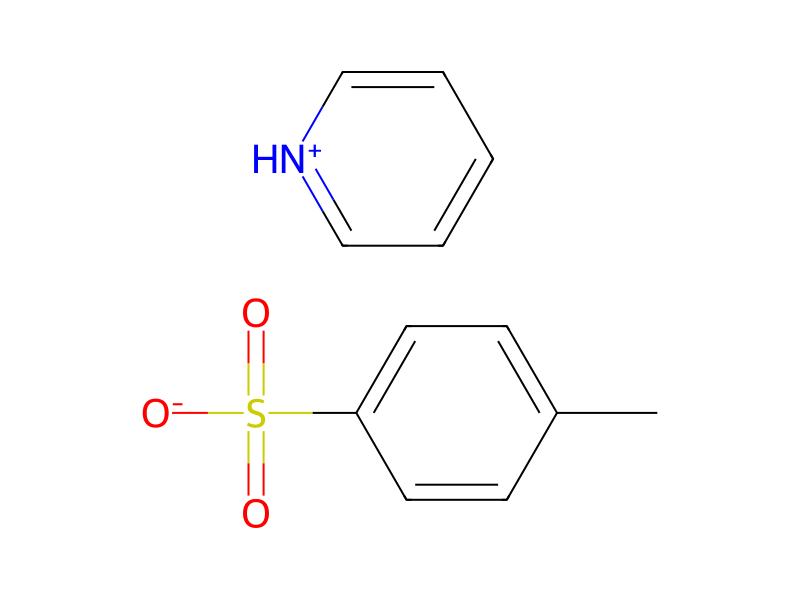
[Br:1][C:2]1[CH:7]=[CH:6][C:5]([C:8]([OH:11])([CH3:10])[CH3:9])=[C:4]([F:12])[CH:3]=1.[O:13]1[CH:18]=[CH:17][CH2:16][CH2:15][CH2:14]1.C1(C)C=CC(S([O-])(=O)=O)=CC=1.[NH+]1C=CC=CC=1>ClCCl>[Br:1][C:2]1[CH:7]=[CH:6][C:5]([C:8]([CH3:10])([O:11][CH:14]2[CH2:15][CH2:16][CH2:17][CH2:18][O:13]2)[CH3:9])=[C:4]([F:12])[CH:3]=1Participants
5
Reactant 3


Product 1

Reagents, catalysts & solvents 1

Procedure
To a stirred solution of 2-(4-bromo-2-fluoro-phenyl)-propan-2-ol (18.5 g, 79.4 mmol) and 3,4-dihydro-2H-pyran (10.9 mL, 119.1 mmol) in dichloromethane (165 mL) was added pyridinium-p-toluene sulfonate (2 g, 7.91 mmol) at room temperature. The resulting mixture was stirred at room temperature for 12 h, extracted with ethyl acetate, washed with brine, dried over anhydrous sodium sulfate. The solvent was evaporated in vacuo and the residue was purified by flash column chromatography (QingDao silica gel, 200-300 mesh, 25% ethyl acetate/hexanes) to afford 2-[1-(4-bromo-2-fluoro-phenyl)-1-methyl-ethoxy]-tetrahydro-pyran (9.7 g, 38.6%) as a light yellow oil.
Workup
- extractionextracted with ethyl acetate
- washwashed with brine
- dry with materialdried over anhydrous sodium sulfate
- customThe solvent was evaporated in vacuo
- customthe residue was purified by flash column chromatography (QingDao silica gel, 200-300 mesh, 25% ethyl acetate/hexanes)
Sources & evidence
- ORD record
- ord-5a06657fb41b443cbcde2b5d527e94dd
- Source dataset
- uspto-grants-2012_07
- Patent number
- US08222416B2
Reaction notes
Loading…