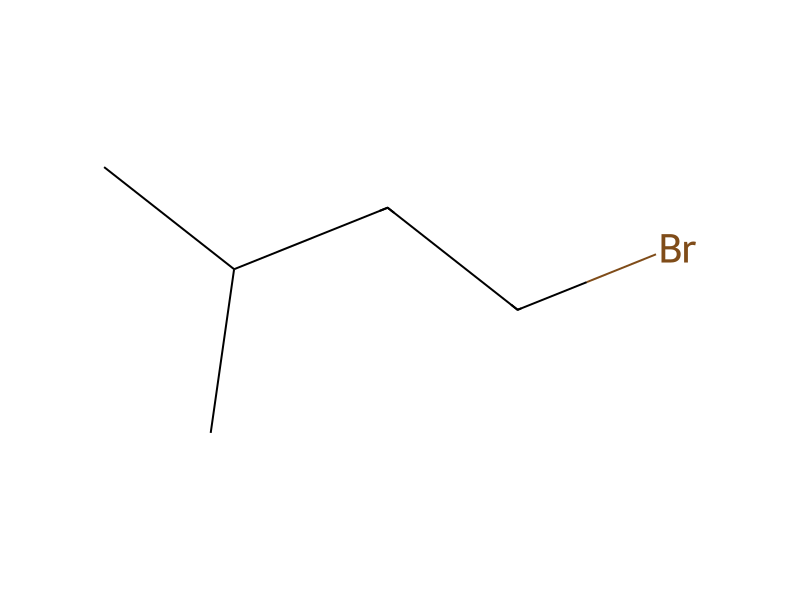
1-Bromo-3-methylbutane → 5-Chloro-1-isopentylindoline-2,3-dione
Reaction equation

C(N1[C:12]2[C:7](=[CH:8]C=CC=2)[C:6](=O)[C:5]1=O)CC.[Cl:15][C:16]1[CH:17]=[C:18]2[C:22](=[CH:23][CH:24]=1)[NH:21][C:20](=[O:25])[C:19]2=[O:26].BrCCC(C)C>>[Cl:15][C:16]1[CH:17]=[C:18]2[C:22](=[CH:23][CH:24]=1)[N:21]([CH2:5][CH2:6][CH:7]([CH3:12])[CH3:8])[C:20](=[O:25])[C:19]2=[O:26]Participants
4


Procedure
This compound was prepared in a similar method as 1-propylindoline-2,3-dione by reacting commercially available 5-chloro isatin (purchase from Fisher Scientific) with commercially available 1-bromo-3-methylbutane (purchase from Fisher Scientific). 1H NMR δ 7.57 (m, 2H), 6.85 (d, 1H), 3.73 (t, 2H), 1.57 (m, 3H), 1.00 (d, 6H).
Sources & evidence
- ORD record
- ord-8632056b8ea543418ffaf0e783f05959
- Source dataset
- uspto-grants-2015_07
- Patent number
- US09079853B2
Reaction notes
Loading…