Triphenylphosphine → HCID 59272912, compound
Reaction equation

[Br:1][C:2]1[CH:7]=[CH:6][C:5]([OH:8])=[C:4]([Cl:9])[CH:3]=1.[O:10]1[CH2:15][CH2:14][CH:13](O)[CH2:12][CH2:11]1.C1(P(C2C=CC=CC=2)C2C=CC=CC=2)C=CC=CC=1>C(Cl)Cl>[Br:1][C:2]1[CH:7]=[CH:6][C:5]([O:8][CH:13]2[CH2:14][CH2:15][O:10][CH2:11][CH2:12]2)=[C:4]([Cl:9])[CH:3]=1Participants
Reactant 3


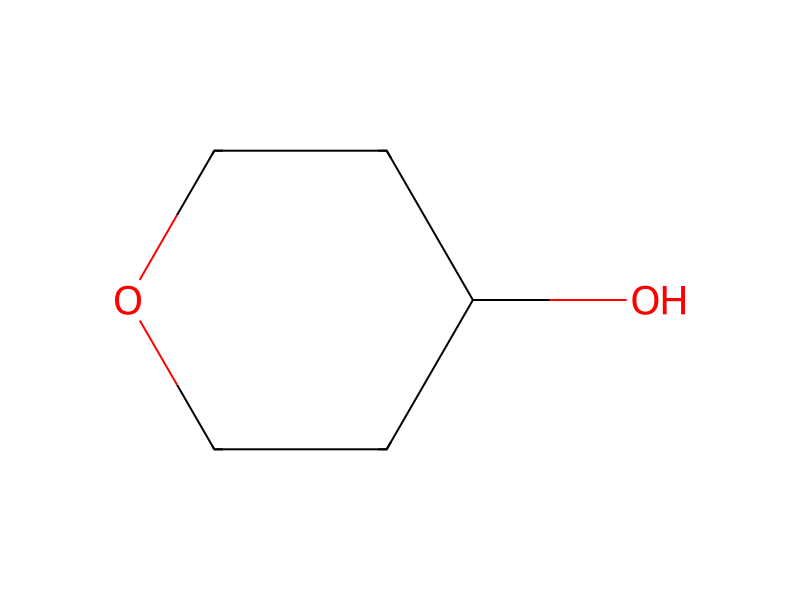
Product 1

Reagents, catalysts & solvents 1

Conditions
- Temperature
- 0 °C
Procedure
A mixture of 4-bromo-2-chloro-phenol (4 g, 19.28 mmol), tetrahydro-4-pyranol (2.20 ml, 23.13 mmol) and polymer supported triphenylphosphine (17.29 g, 39.29 mmol; purchased from Argonaut, loading 2.23 mmol/g) was suspended in DCM (250 ml) and then cooled to 0° C. Di-tert-butyl azadicarboxylate (6.65 g, 28.92 mmol) was added portionwise and the reaction mixture was warmed to r.t. and shaken for 2 h. The resin was filtered off and washed with DCM. The combined filtrates were evaporated to dryness. The crude product thus obtained was purified by column chromatography (silica gel; DCM/7M solution of NH3 in MeOH up to 2%). The desired fractions were collected and concentrated in vacuo to yield intermediate compound D27 as colorless oil (5.38 g, 95%).
Workup
- additionDi-tert-butyl azadicarboxylate (6.65 g, 28.92 mmol) was added portionwise
- temperaturethe reaction mixture was warmed to r.t.
- filtrationThe resin was filtered off
- washwashed with DCM
- customThe combined filtrates were evaporated to dryness
- customThe crude product thus obtained
- customwas purified by column chromatography (silica gel; DCM/7M solution of NH3 in MeOH up to 2%)
- customThe desired fractions were collected
- concentrationconcentrated in vacuo
Sources & evidence
- ORD record
- ord-6c72b9c6d6ec410fbe68e4681587c3a3
- Source dataset
- uspto-grants-2015_07
- Patent number
- US09085577B2
Reaction notes
Loading…