Methanethiol → 3-(1-Methylthiotridecyl)-5-trimethylsilylfuran
Reaction equation

Cl[CH:2]([C:15]1[CH:19]=[C:18]([Si:20]([CH3:23])([CH3:22])[CH3:21])[O:17][CH:16]=1)[CH2:3][CH2:4][CH2:5][CH2:6][CH2:7][CH2:8][CH2:9][CH2:10][CH2:11][CH2:12][CH2:13][CH3:14].[CH3:24][SH:25].C[O-].[K+]>O1CCCC1>[CH3:24][S:25][CH:2]([C:15]1[CH:19]=[C:18]([Si:20]([CH3:23])([CH3:22])[CH3:21])[O:17][CH:16]=1)[CH2:3][CH2:4][CH2:5][CH2:6][CH2:7][CH2:8][CH2:9][CH2:10][CH2:11][CH2:12][CH2:13][CH3:14]Participants
5
Reactant 3
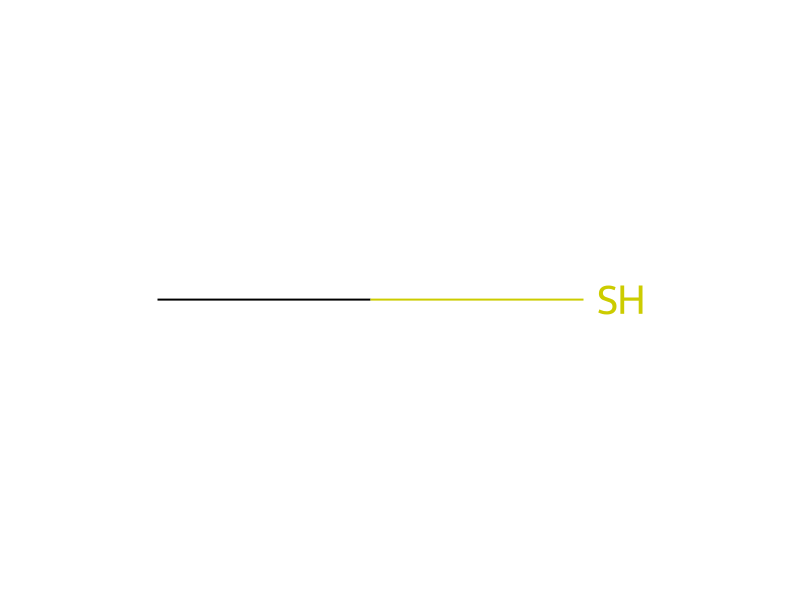


Product 1

Reagents, catalysts & solvents 1

Procedure
A mixture of 3-(1-chlorotridecyl)-5-trimethylsilylfuran, methyl mercaptan and potassium methoxide in tetrahydrofuran is stirred at room temperature to give 3-(1-methylthiotridecyl)-5-trimethylsilylfuran. Oxidizing using Rose Bengal by the procedure of Example 1 gives 4-(1-methylthiotridecyl)-5-hydroxy-2(5H)-furanone.
Sources & evidence
- ORD record
- ord-50fa24e29c8b492daa3eb40af4dfcf44
- Source dataset
- uspto-grants-1992_02
- Patent number
- US05089485
Reaction notes
Loading…