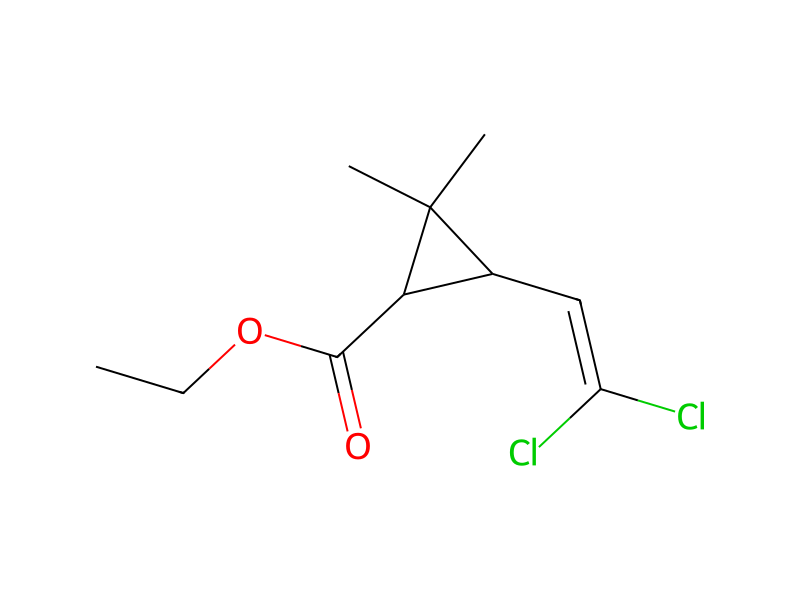
Ethyl diazoacetate → Cyclopropanecarboxylic acid, 3-(2,2-dichloroethenyl)-2,2-dimethyl-, ethyl ester
Reaction equation

[N+](=[CH:3][C:4]([O:6][CH2:7][CH3:8])=[O:5])=[N-].[Cl:9][C:10]([Cl:16])=[CH:11][CH:12]=[C:13]([CH3:15])[CH3:14]>S([O-])([O-])(=O)=O.[Cu+2]>[CH3:14][C:13]1([CH3:15])[CH:12]([CH:11]=[C:10]([Cl:16])[Cl:9])[CH:3]1[C:4]([O:6][CH2:7][CH3:8])=[O:5]Participants
4
Reactant 2


Product 1
Reagents, catalysts & solvents 1
Procedure
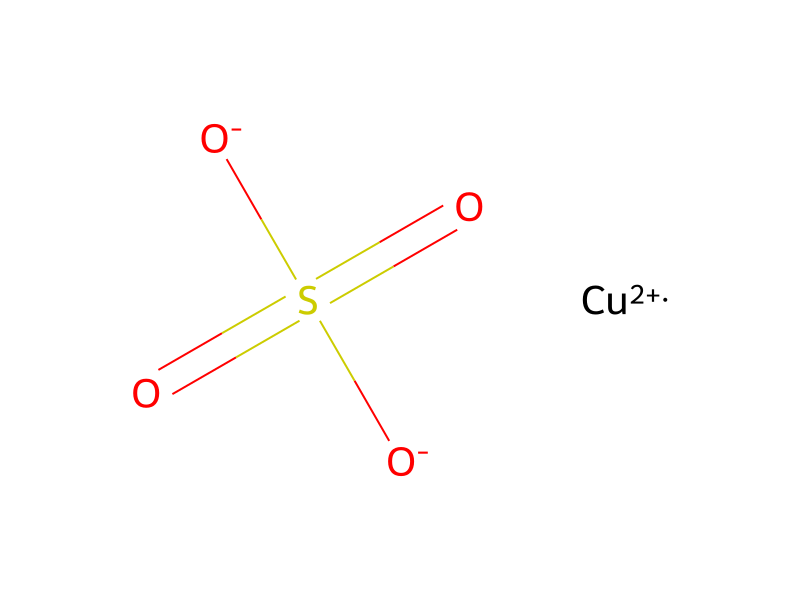
Thus, for example, in Pesticide Science (1974) 5, 791-799 it is shown that the reaction between ethyl diazoacetate and 1,1-dichloro-4-methylpenta-1,3-diene in the presence of copper sulfate to produce ethyl 2,2-dimethyl-3-(2,2-dichlorovinyl)-cyclopropanecarboxylate, results in a product which is contaminated with up to 20% of ethyl fumarate and maleate.
Sources & evidence
- ORD record
- ord-5b673f6305924bb9bf9b5cee752d3e0d
- Source dataset
- uspto-grants-1981_09
- Patent number
- US04288610
Reaction notes
Loading…