Formaldehyde → HCID 53932913, compound
Reaction equation

[CH2:1]=O.[NH:3]1[C:11]2[C:6](=[CH:7][CH:8]=[CH:9][CH:10]=2)[CH:5]=[CH:4]1.Cl.[NH:13]1[CH2:18][CH2:17][CH:16]([N:19]2[C:23](=[O:24])[C:22]3[CH:25]=[CH:26][CH:27]=[CH:28][C:21]=3[S:20]2(=[O:30])=[O:29])[CH2:15][CH2:14]1>CO>[NH:3]1[C:11]2[C:6](=[CH:7][CH:8]=[CH:9][CH:10]=2)[C:5]([CH2:1][N:13]2[CH2:14][CH2:15][CH:16]([N:19]3[C:23](=[O:24])[C:22]4[CH:25]=[CH:26][CH:27]=[CH:28][C:21]=4[S:20]3(=[O:29])=[O:30])[CH2:17][CH2:18]2)=[CH:4]1Participants
Reactant 3

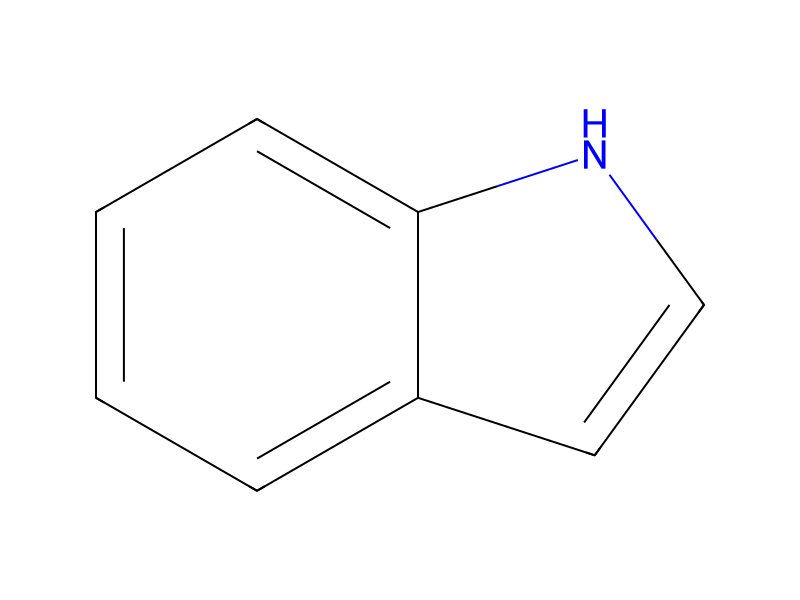

Product 1

Reagents, catalysts & solvents 1

Procedure
Formaldehyde (0.4 cm3, 40% aqu.soln.) was added to a mixture of indole (0.6 g, 0.005 mol), 2-(piperid-4-yl)-1,2-benzisothiazoline-3-one-1,1-dioxide, hydrochloride (1.5 g, 0.005 mol) and methanol (10 cm3). The mixture was warmed sufficiently to give a clear solution and then allowed to stand without further heating for 2 hours. The clear solution was then evaporated, and the residual water removed by successive evaporation of the residue with ethanol to give a gum. The gum was dissolved in methanol and allowed to stand in ice whereupon the crystalline title compound separated (1.7 g, 79%) as the hydrochloride. Recrystallisation twice from aqueous methanol (80% methanol) gave 1.3 g of the title compound as the hydrochloride hemihydrate, m.p. 214°-215° C.
Workup
- temperatureThe mixture was warmed sufficiently
- customto give a clear solution
- temperaturewithout further heating for 2 hours
- customThe clear solution was then evaporated
- customthe residual water removed by successive evaporation of the residue with ethanol
- customto give a gum
Sources & evidence
- ORD record
- ord-8b600960653a468d99739a7be9f6d4bc
- Source dataset
- uspto-grants-1981_09
- Patent number
- US04291042
Reaction notes
Loading…