Ethanol → 1-Hexanol
Reaction equation

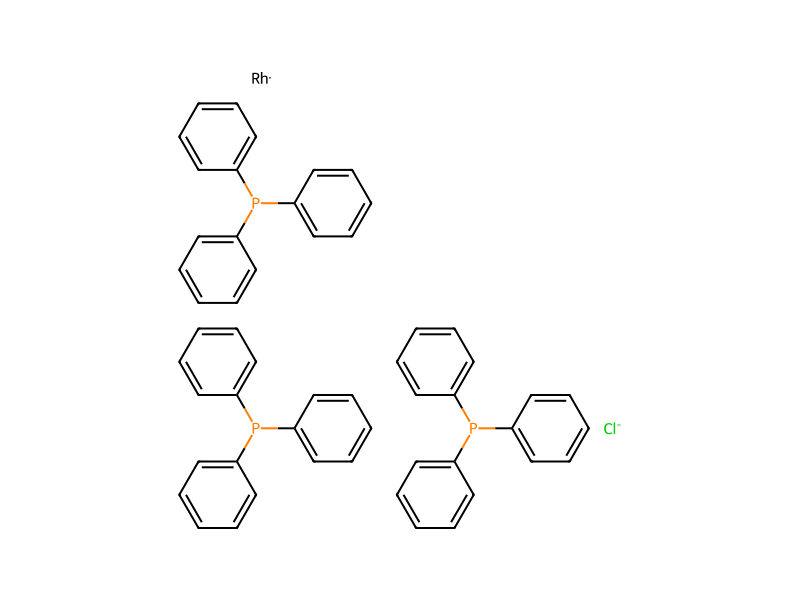
[Rh:1](Cl)(Cl)[Cl:2].[C:5]1([P:11]([C:18]2[CH:23]=[CH:22][CH:21]=[CH:20][CH:19]=2)[C:12]2[CH:17]=[CH:16][CH:15]=[CH:14][CH:13]=2)[CH:10]=[CH:9][CH:8]=[CH:7][CH:6]=1.[CH:24]1[CH:29]=[CH:28][C:27]([P:30]([C:37]2[CH:42]=[CH:41][CH:40]=[CH:39][CH:38]=2)[C:31]2[CH:36]=[CH:35][CH:34]=[CH:33][CH:32]=2)=[CH:26][CH:25]=1.[CH:43]1[CH:48]=[CH:47][C:46]([P:49]([C:56]2[CH:61]=[CH:60][CH:59]=[CH:58][CH:57]=2)[C:50]2[CH:55]=[CH:54][CH:53]=[CH:52][CH:51]=2)=[CH:45][CH:44]=1.[CH:62]1[CH:67]=[CH:66][C:65](P([C:75]2[CH:80]=[CH:79]C=CC=2)C2C=CC=CC=2)=[CH:64][CH:63]=1.[Cl-].[Rh].[CH3:83]CCC=C.[CH2:88]([OH:90])[CH3:89]>C1C=CC=CC=1>[CH:21]1[CH:20]=[CH:19][C:18]([P:11]([C:12]2[CH:17]=[CH:16][CH:15]=[CH:14][CH:13]=2)[C:5]2[CH:10]=[CH:9][CH:8]=[CH:7][CH:6]=2)=[CH:23][CH:22]=1.[CH:40]1[CH:39]=[CH:38][C:37]([P:30]([C:31]2[CH:36]=[CH:35][CH:34]=[CH:33][CH:32]=2)[C:27]2[CH:28]=[CH:29][CH:24]=[CH:25][CH:26]=2)=[CH:42][CH:41]=1.[CH:59]1[CH:58]=[CH:57][C:56]([P:49]([C:50]2[CH:55]=[CH:54][CH:53]=[CH:52][CH:51]=2)[C:46]2[CH:47]=[CH:48][CH:43]=[CH:44][CH:45]=2)=[CH:61][CH:60]=1.[Cl-:2].[Rh:1].[CH2:88]([OH:90])[CH2:89][CH2:83][CH:80]([CH3:79])[CH3:75].[CH2:62]([OH:90])[CH2:63][CH2:64][CH2:65][CH2:66][CH3:67]Participants
9
Reactant 5




Product 3


Reagents, catalysts & solvents 1

Procedure
Chlorotris(triphenylphosphine)rhodium(I), [(03P)3RhCl], was prepared by refluxing an ethanol solution of rhodium(III) chloride in the presence of an excess amount of triphenylphosphine. Chlorotris(triphenylphosphine)rhodium(I) was dissolved in benzene, and the microspheres of Example III were added to the resulting red solution in an autoclave, equipped with a magnetic driven stirrer. Pentene-1 was introduced to the reactor along with benzene. The reaction was performed under conditions similar to Example IV. About 82% of the feed was reacted to give predominantly isohexanol and n-hexanol. The solid catalyst left inside of the reactor from this run was rinsed with fresh portions of benzene, and saved for another run.
Workup
- additionthe microspheres of Example III were added to the resulting red solution in an autoclave
- customequipped with a magnetic driven stirrer
- customAbout 82% of the feed was reacted
Sources & evidence
- ORD record
- ord-a139d5fb50024904a4df2e9a278658fa
- Source dataset
- uspto-grants-1976_02
- Patent number
- US03937742
Reaction notes
Loading…