Methyl Ethyl Ketone → Methyl 4-(2-bromoethoxy)benzoate
Reaction equation

[CH3:1][O:2][C:3]([C:5]1[CH:6]=[CH:7][C:8]([OH:11])=[CH:9][CH:10]=1)=[O:4].C(=O)([O-])[O-].[K+].[K+].[Br:18][CH:19](Br)[CH3:20].C(C(C)=O)C>C(OCC)(=O)C.CCCCCC>[Br:18][CH2:19][CH2:20][O:11][C:8]1[CH:9]=[CH:10][C:5]([C:3]([O:2][CH3:1])=[O:4])=[CH:6][CH:7]=1Participants
6
Reactant 4

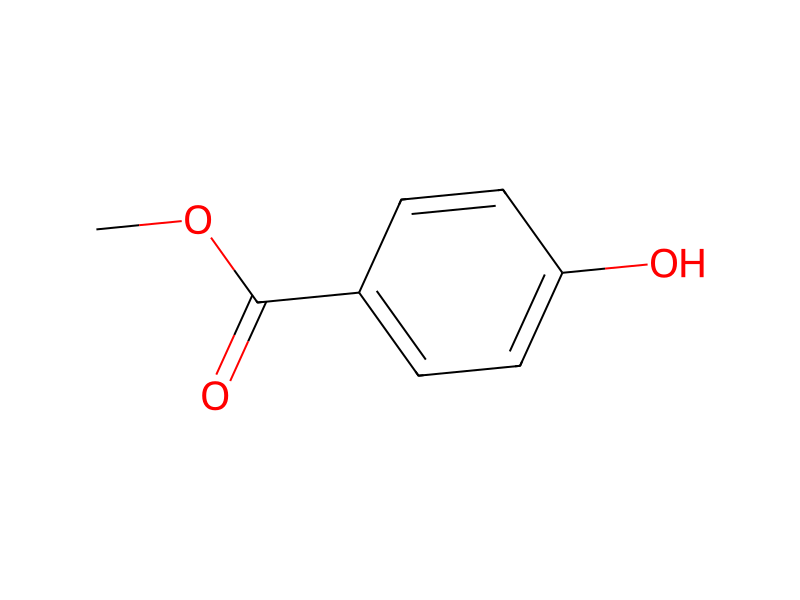


Product 1

Reagents, catalysts & solvents 1

Procedure
A mixture of 100 g. of methyl p-hydroxybenzoate, 200 g. of anhydrous potassium carbonate, 400 g. of dibromoethane and 1500 ml. of methyl ethyl ketone is refluxed under vigorous stirring for 24 hours, at the end of which time the reaction is essentially complete, as demonstrated by t.l.c. using an ethyl acetate-hexane mixture (60:20) as gradient. The solid is separated by filtration, and the filtrate is evaporated to dryness under vacuo. The oily residue is dissolved in ethyl acetate, washed twice with water, dried over magnesium sulfate and evaporated to dryness under vacuo, to yield methyl 4-(2-bromoethoxy)benzoate.
Workup
- additionA mixture of 100 g
- customThe solid is separated by filtration
- customthe filtrate is evaporated to dryness under vacuo
- dissolutionThe oily residue is dissolved in ethyl acetate
- washwashed twice with water
- dry with materialdried over magnesium sulfate
- customevaporated to dryness under vacuo
Sources & evidence
- ORD record
- ord-149c22f0a6c3419fa875ce57977d27ac
- Source dataset
- uspto-grants-1976_02
- Patent number
- US03940407
Reaction notes
Loading…