Nitric Acid → 1-Nitroanthraquinone
Reaction equation

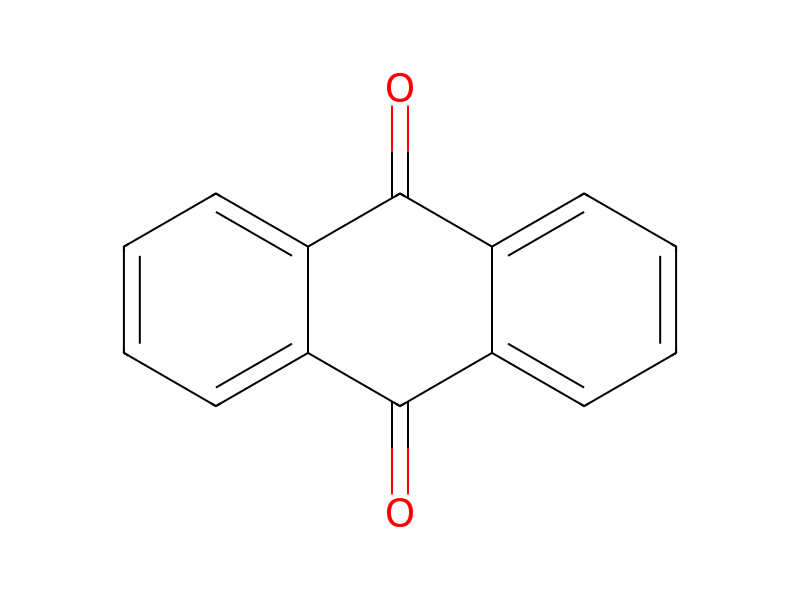
[CH:1]1[C:14]2[C:13](=[O:15])[C:12]3[C:7](=[CH:8][CH:9]=[CH:10][CH:11]=3)[C:6](=[O:16])[C:5]=2[CH:4]=[CH:3][CH:2]=1.[N+:17]([O-])([OH:19])=[O:18]>S(=O)(=O)(O)O>[N+:17]([C:8]1[C:7]2[C:6](=[O:16])[C:5]3[C:14](=[CH:1][CH:2]=[CH:3][CH:4]=3)[C:13](=[O:15])[C:12]=2[CH:11]=[CH:10][CH:9]=1)([O-:19])=[O:18]Participants
4


Reagents, catalysts & solvents 1

Procedure
Thus, for example, a process for the nitration of anthraquinone in sulphuric acid by means of nitric acid is known from German Offenlegungsschrift (German Published Specification) 2,039,822. Even using the best embodiment of this process, the crude product must be purified by washing with acid amides, for example dimethylformamide. 95-96% pure 1-nitroanthraquinone is obtained in 42% yield. A disadvantage of this process is that organic solvents are used, the recovery of which, in special apparatuses, is difficult and expensive, solvent losses being unavoidable.
Workup
- customthe crude product must be purified
Sources & evidence
- ORD record
- ord-08a563763387420b9882b099fbafd40a
- Source dataset
- uspto-grants-1976_01
- Patent number
- US03931252
Reaction notes
Loading…