Phloroglucinol → HCID 131709921, compound
Reaction equation

[C:1]1([CH:9]=[C:7]([OH:8])[CH:6]=[C:4]([OH:5])[CH:3]=1)[OH:2].C(O[CH2:14][C:15]1[CH:20]([C:21]([OH:23])=[O:22])[N:19]2[C:24](=[O:36])[CH:25]([NH:26][C:27](=[O:35])[CH2:28][C:29]3[CH:34]=[CH:33][CH:32]=[CH:31][CH:30]=3)[C@H:18]2[S:17][CH:16]=1)(=O)C>FC(F)(F)C(O)=O.C1(C)C=CC=CC=1>[C:29]1([CH2:28][C:27]([NH:26][CH:25]2[C:24](=[O:36])[N:19]3[CH:20]([C:21]([OH:23])=[O:22])[C:15]([CH2:14][C:9]4[C:1]([OH:2])=[CH:3][C:4]([OH:5])=[CH:6][C:7]=4[OH:8])=[CH:16][S:17][C@H:18]23)=[O:35])[CH:34]=[CH:33][CH:32]=[CH:31][CH:30]=1Participants
5
Reactant 2
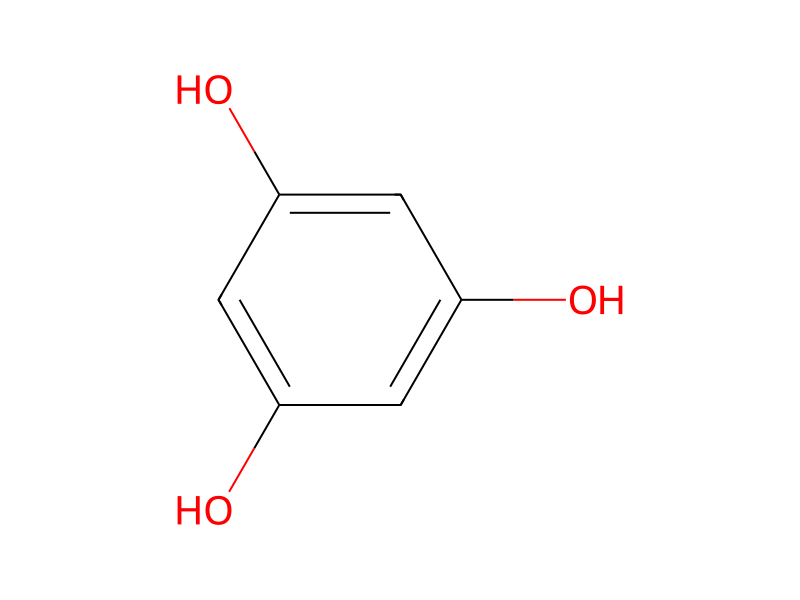

Product 1

Reagents, catalysts & solvents 2


Procedure
A solution of 0.063 g of phloroglucinol in 0.3 ml of trifluoroacetic acid is mixed with 0.04 g of 3-acetoxymethyl-7-(N-phenylacetyl-amino)-ceph-2-em-4ξ-carboxylic acid, and the solution is left to stand for 30 minutes at room temperature and diluted with an equal quantity of toluene. The mixture is evaporated to dryness under reduced pressure and the residue is worked up in accordance with the process described in example 6. 7-(N-Phenylacetyl-amino)-3-(2,4,6-trihydroxy-benzyl)-ceph-2-em-4ξ-carboxylic acid is thus obtained, showing the following Rf values in a thin layer chromatogram (silica gel): 0.73 (system n-butanol/acetic acid/water, 67:10:23) and 0.55 (system n-butanol/ethanol/water, 40:10:50).
Workup
- waitthe solution is left
- customThe mixture is evaporated to dryness under reduced pressure
Sources & evidence
- ORD record
- ord-ae8598b3a3d54fa8b2c096be53de0e6c
- Source dataset
- uspto-grants-1976_01
- Patent number
- US03932465
Reaction notes
Loading…